
Welcome, visitor! [ Register | Login

IPSC AFRICA AREA CHAMPS IN ZIMBABWE

Announcement July 6, 2022

IPSC AFRICAN AREA CHAMPIO0NSHIPS IN ZIMBABWE
I J Larivers


“Are you ready?” “Stand by!” “Beep!” And so began each stage of the 2012 Practical Pistol Africa Area Championships held in Bulawayo, Zimbabwe over three days this September, 2012.

The Africa Area Handgun Championships of the International Practical Shooting Confederation is an IPSC Level IV match which is just one step below a world championship. It is held every three years in Africa in the year following the IPSC world shoot, and has, until now, been most ably hosted by South Africa. Zimbabwe was awarded its first All Africa match in 2000 – the year that country embarked upon its ‘farmageddon policy’. International competitors’ doubts about Zimbabwe’s stability resulted in the match being hastily transferred to South Africa.


Zimbabwe sent strong squads to successive Africa Area matches in Durban in 2003, Polokwane in 2006, and Welkom in 2009. At the Welkom match Zimbabwe made a successful bid to host the 2012 match at Bulawayo’s Donnington Practical Pistol Club. The club has excellent facilities and, as a bonus, is close to the South African border. Even though the competition was three years away, Zimbabwe’s Regional Director Tara Maidwell, a veteran of four world championship shoots, began work immediately to organize local and foreign sponsorship, range expansion and development, a cadre of enthusiastic range officials, and the myriad other administrative tasks that lead up to a successful event.


Despite the negative publicity that surrounded Zimbabwe, the country’s Sports & Recreation Commission and Central Firearms Registry were one hundred percent behind the match and gave their wholehearted support. The end result was a 24-stage shoot, requiring a minimum of 426 rounds, which was shot over 12-14 September. South African and Namibian officials arrived early and conducted Level I and II range officers’ seminars for interested Zimbabweans, and the officials shot the two-day pre-shoot to iron out any last minute difficulties and free them to officiate during the main match.

MVI_0025

Tara Maidwell served as Match Director, while Jorn Schmidt-Dumont from Namibia offered his very capable services as Range Master ably assisted by Fred Scott from South Africa. Rita Stockbridge from South Africa ran the Stats Office as only she can, effortlessly and efficiently, and Louise Groenewald, also from South Africa, assisted. A total of 111 shooters from Australia, the Czech Republic, Germany, Great Britain, Lithuania, Namibia, Norway, South Africa, Switzerland, and the United States participated in the shoot, which was hailed as “as good as a world championship”.


Competitors entered in four of the five IPSC divisions – Open, Standard, Production and Classic. The range designs were Africa-themed, and each course of fire was a different and demanding challenge of a competitor’s shooting skills, and mental agility – most of the trials had numerous possible solutions depending on the individual’s strengths and weaknesses. In a sport where the top five places may be separated by little more than a percentage point, staying at the top, especially over three There was much emphasis placed on moving and reactive targets. Stage 1, ‘Mind the Gorge’, for instance, was a long 32-round course which featured a fast-paced combination of static, disappearing, swinging and running targets, and required the competitor to cross and balance on a giant see-saw whilst engaging targets on all sides. Stage 20, ‘Zebra Crossing’, required the shooter to fire twelve rounds at a combination of steel and paper targets whilst trying to balance on two swinging panels suspended off the ground by chains. Stage 21, ‘Croc Gorge’, saw the competitor engaging six targets while seated in a boat that was enthusiastically rocking back and forth like a porch swing, which was surprisingly easy once you got around the mind game. Other stages were simply fun, like Stage 3, ‘Rain Forest’, where the shooter fired twelve rounds at a number of targets whilst remaining underneath a mock-up of the Victoria Falls bridge, complete with a sprinkler system for the rain forest effect, and that was a very welcome respite from the hot daytime temperatures! Or Stage 17, ‘Bush Pilot’, the competitor was called upon to fire nine accurate shots across an arc of 180 degrees while tightly strapped in an airplane seat. Stages 6 and 7, ‘Fuel Woes’ were repetitions of the same nine round course of fire which tested your ability to shoot with firstly the strong hand and then the weak hand, unsupported. A good stage in a Practical Pistol match will provide options, in other words, there is more than one way of shooting it, and stages like 16, ‘Lion’s Lair’ rewarded good marksmen who were confident of hitting small steel plates at long range. True, you were given the option of moving closer, but since your final point score is divided by the time it takes you to shoot the stage, choices like this must be weighed carefully. At the end of the match, seven shooters had been disqualified for safety infractions and the remaining 104 could reflect back on three days of challenging courses of fire, time spent with good friends new and old, and perhaps heave a sigh of relief that they had made it through unscathed. Experienced range officers like Jorn Schmidt-Dumont, Daan Kemp and Vaughan Stockwell led the team who ensured that a very professional standard of range safety and sportsmanship prevailed. And Zimbabwe was privileged to be able to call on the experience of competitors like Namibia’s Regional Director Rico Viljoen and South Africa’s Gerrit Dokter for advice and assistance. When the dust had settled, Pierre Wrogemann from South Africa won the Open Division shooting an SPS 9mm to accrue 1925.9384 match points, while silver and bronze went respectively to Martin Kamenicek of the Czech Republic with 1920.5469 points, shooting a CZ 9mm and Dirk Becker from South Africa who scored 1611.2868 with his STI .38 Super. In Standard Division, South Africa swept the board, with Muhammed Kolia the clear winner shooting an STI .40 S&W to score 1971.9781 points ahead of Justin Peacock with 1822.3047 scored with his Para Ordnance .40 S&W, and Heinrich Dance who shot 1773.3066 points also using a .40 S&W Para Ordnance pistol. Top honours in Production Division went to Miroslav Zapletal from the Czech Republic who shot a 9mm CZ Shadow to great effect scoring 2045.3639 points. South Africans Heinrich Patzen and Louis Keyter scored 1862.4226 and 1787.0328 points respectively for second and third places, shooting a CZ Shadow and a CZ 75. And lastly, in the then-fledgling Classic Division, Gerrit Dokter from South Africa won the gold with a score of 2015.4808 points shooting a Colt .45ACP, Vaughan Stockwell of Australia placed second with a Kimber .38 Super and a score of 1809.4999, and also shooting the venerable Colt .45 South Africa’s Fred Scott scored 1263.5290 (and perhaps it could be said that the shooters in Classic Division were venerable as well, as with the exception of Vaughan they were all Seniors).


This shoot followed on the heels of the Africa Area Bench Rest Rifle championship, which was hosted by Cleveland Pistol Club in Harare in August and also attracted a number of competitors from South Africa and Namibia. Through a combination of hard work and attention to detail, Zimbabwean shooters are proving that the country has what it takes to host major international shooting events again, and also that it is possible to gain enthusiastic support for them from government departments like the police and Central Firearms Registry, long may it continue.

129 total views, 0 today

THE HUNTING HANDGUN COMES INTO ITS OWN

Announcement May 23, 2022


THE HUNTING HANDGUN COMES INTO ITS OWN
I J Larivers

(Originally published in MAN Magnum magazine)


In the hunting world, the handgun will always be a grey area. It can be a primary hunting tool, or it can be a backup for professional hunters or guides. In Africa, in the case of canoe guides, it is often the only armament they carry.

But will it ever break out of the “bastard son” mould, either in perception or performance? Maybe it finally has.

Some years ago, I wrote an article that focused on handguns that attempted to bridge the gap − handguns that came close to providing rifle ballistics. They were the Thompson-Center Contender in .30-30, and the MOA chambered for .358 Winchester.


They were both single shot, and while either would have been suitable for medium-sized game in the same way that Ross Seyfried’s famous single-shot .600 Nitro was, they would have had no value as backup firearms; their main raison d’etre was long-range metallic silhouette work. Later, I wrote about backup guns for PHs, along the lines of the .44 Rem Mag, the newer .480 Ruger, and basically whatever was locally available that I could play with and photograph. At that time, there wasn’t an example of the .500 Smith & Wesson Magnum available in Zimbabwe.

It’s been a long time since Dirty Harry’s venerable Smith & Wesson Model 29 was “the most powerful handgun in the world” (the .454 Casull was in existence back then, but didn’t go into commercial production until almost the end of the millennium).

After having blown up a couple of .45 Colts, the legendary Elmer Keith (among other pioneering hand-loaders) settled on the .44 Special cartridge as the building block for his new .44 Magnum, and Smith & Wesson built its first M29 on 15 December 1955 in collaboration with Remington Arms – the .44 Rem Mag pretty much ruled the roost for a good many years, though the odd wildcat came and went.

The troubles with wildcats are legion, but if you can get a commercial arms manufacturer to produce the firearm and the ammunition, you’re on your way. In the case of the .500 S&W Mag, the cartridge was brought out by high-performance ammo manufacturers Cor-Bon, together with the Smith & Wesson X-frame revolver at the SHOT Show in 2003 – a new concept for a new millennium. This new combination didn’t come out with Africa in mind, but rather to provide a primary hunting handgun for all things North American.


When “magnum” handguns come to mind, we tend automatically to think solely Smith & Wesson. Pretty much from the start, with the .357 Mag in 1935, they’ve had their finger on the pulse. But as wildcatting became easier, other players began to emerge – Casull, Linebaugh, Ruger, Wildey and Winchester, not in any chronological order.

But early in the 21st Century, Smith & Wesson’s product manager Herb Belin again set out to claim the crown for the world’s most powerful production handgun. Working in collaboration with Peter Pi of Cor-Bon ammunition, which had built its name around high-performance ammo, the result was a semi-rimmed, straight-walled case which held a .500″ bullet. All well thought-out goals. A semi-rimmed cartridge would headspace on the rim in the revolvers, for which it was primarily designed. But it would also work more reliably in rifle magazines, particularly tubular magazines, than a fully rimmed case. And in terms of the United States’ National Firearms Act, any bullet exceeding .500 in diameter would be classified as a “destructive device” (I thought that was the idea, but anyway…). Linebaugh’s .500 and the .50 Action Express by Whildin, both at .510 both had to be re-designed because of this.


When Dr Frankenstein made his monster, it probably didn’t wear size 7 shoes. The .500 S&W Magnum is designed around a maximum working pressure of 60,000cup/ psi but imagine using a conventional revolver extractor to remove five spent cases at once. Most .500 factory ammunition is loaded to some 20% less for this purpose. Proof-testing is done at 20% over pressure, and Smith & Wesson has made this monster of a revolver to withstand 50% over-pressure loads. Also, sadly, cast lead bullets are not recommended as, unlike most .50 calibres where the bore’s groove diameter is the same as the bullet diameter, the Smith & Wesson’s is slightly less at .4983. Leading will occur in the barrel and on the forcing cone, and pressures can become excessive.

The .500 S&W cartridge leaves its primogenitor, the .44 Rem Mag, behind in two very impressive parameters. The first is bullet weight. For the purpose of this article we were able to play with Hornady XTP hollow points weighing 350gr, and Woodleigh’s jacketed soft-nose tipping the scales at 400gr. The second is velocity. While Elmer Keith envisaged 1 400fps as a sort of benchmark for the .44 with a 240gr bullet, many commercial manufacturers have backed off to around 1 200fps. And, let’s face it, how many folks with a .44 Rem Mag actually put in enough range time to really master it, even at those specs? In the .500, Cor-Bon gives us a 325gr bullet at 1 800fps, a 400gr bullet at 1 625fps and a 440gr load which also zips along at 1 625fps. Some loads are available with 500gr bullets, and one high-performance round claims 1 975fps for a 350gr bullet.

Think about that for a minute, relative to a .458 Win Mag perhaps, and then do the maths on the muzzle energy.


The Zimbabwe Parks and Wildlife Act mandates muzzle energy of 5.3 kilojoules (kJ) as the power floor for use on heavy dangerous game. Well, this load for the .500 doesn’t quite make it, at 4.1kJ (neither did Karamojo Bell’s 7mm), but this does underscore the cartridge’s potential as a backup gun for African PHs and guides, and it also gives pause for thought to those of us who always recited the old mantra that the most powerful handgun will never equate to any more than a mediocre rifle…blah, blah, blah. The .500 S&W has been used on elephant and buffalo, and with heavier bullets with greater sectional densities it can no doubt do the job at appropriate ranges. The .500 is up to 40% more powerful than the .460 S&W, which is its only serious challenger, and the possibilities for competent reloaders in both calibres are legion.

Cor-Bon has introduced the .500 Special, as a lower-powered alternative, and there are all sorts of low recoil or reduced recoil offerings on the market. However, they’re still more of a handful than the .44 Rem Mag. And, to be honest, this calibre is a beast to fire.

S&W offered the revolver with Hogue’s fine Sorbothane grips and a compensator (of which I have always doubted the efficacy for single shots, and I’m not going to double-tap a .500 to see how well it works). As the revolver can weigh five pounds, well, that helps too. The test gun had been scaled back to 6″ for more practical use in the bush, and so the compensator was lost.

We don’t get factory ammo for the likes of the .500 S&W here in Zimbabwe, and anyone contemplating using one is going to need a supply of bullets d a set of dies. We did at that time have an excellent selection of the very good powders made by Rheinmetall Denel (Somchem) of South Africa, so, off to the range we went.


We chose Somchem’s S265 as having an almost ideal burning rate for this application; it is very similar to the American IMR4227 with which I was also familiar. We used two bullet types – Hornady’s 350gr JHP in their XTP configuration, and a very nice Woodleigh 400gr full-jacketed soft-nose. Time was a constraint: we only had one day before the revolver’s owner, a canoe guide, needed to leave for the Zambezi Valley with the gun and ammo.

Eventually, after (careful) trial, we chose 41gr of S265 for the 350gr JHP. (We had gone up to 47gr, but the signs of excessive pressure gave us just a little cause for circumspection.) The results over the chronograph were impressive: 1 720fps, which produced muzzle energy of some 2 316 foot pounds, or 3.1kJ.


That is more than “good enough for government work” as the old saying goes, and while we look forward to a lot more experimentation with the calibre in due course, it’s safe to say that the hunting handgun has finally come into its own in a lot of new ways.


145 total views, 0 today

THE LOST STRONGHOLD

Announcement May 16, 2022

ZAMBEZI VALLEY – THE LOST STRONGHOLD
By Silvana Olivo


Operation Stronghold. Initiated in 1984 to protect the endangered black rhinoceroses of the Zambezi Valley against cross-border poaching incursions by Zambian gangs in the employ of powerful cartels in Lusaka, it was a desperate attempt to safeguard a vanishing piece of Zimbabwe’s natural history heritage, and one ultimately doomed to failure.

Zimbabwe at one time had the world’s largest population of black rhinos – around 2,400 – but as the poachers decimated the animals’ numbers in the Luangwa Valley, they moved south, across the Zambezi, into Zimbabwe to carry on the carnage. In 1984, President Robert Mugabe authorised a shoot-on-sight protocol to give game rangers a fighting chance in what had already become known as the Rhino War – one of many to be fought in Africa. Paramilitary National Parks units, working side by side with elements of the police, army and air force attempted to stem the tide, while undercover operations by National Parks Investigations Branch were targeted at the traffickers and cartels, but it was becoming apparent that this was already a no-win situation.

Between the years 1980 and 1993, 1,134 rhinos were poached in Zimbabwe, and only 337 horns were recovered. 169 armed poachers were killed in firefights with the security forces and a further 91 were wounded. 4 National Parks personnel were killed in action, and 5 wounded. In the end, it became necessary to translocate as many black rhino as possible out of the Zambezi Valley.

Zambezi Valley: The Lost Stronghold is the story of a handful of dedicated rangers who fought against all odds to protect the last bastion of the greatest concentration of wild black rhinos on earth. Operation Stronghold took place against a broader backdrop of great transition in southern Africa, with China’s influence on the ascendancy, and a more localised setting of corrupt politics and increasing instability in Zimbabwe.

The story has never been told in its entirety. Until now. Silvana Olivo’s Zambezi Valley: The Lost Stronghold is distinguished by two main features: Firstly, it is not just an account of a groundbreaking, last-ditch effort to save an endangered species in its natural habitat, it is a personal memoir, much of which is taken from the author’s diaries and all of which is taken from the author’s firsthand experiences. And secondly, it is extremely well-written. Silvana Olivo is a very good writer, with a clear and concise style that puts the reader in the Zambezi Valley and along the corridors of power in Harare as the story unfolds.

The Rhino War in the Zambezi Valley was fought by men who risked their lives for very little in exchange, and was dynamically led by National Parks Chief Warden, Operations, Glenn Tatham, whose idea Operation Stronghold had been.

Noted conservationist, author and artist Clive Walker – founder of Lapalala Wilderness rhino sanctuary, the Endangered Wildlife Trust and the Elephant and Rhino Foundation – has written the foreword to this book, which is the result of Silvana Olivo’s personal involvement in Operation Stronghold almost thirty years ago. At 21, she became the official Italian representative for half of the decade-long Operation Stronghold.

Silvana’s story unfolds through the direct reporting of her experiences in the African bush, including the aftermath of firefights with poachers, and the subsequent translocation and dehorning of rhinos. She documents the crisis on various levels, from National Parks field stations to Head Office rhino management decisions and policies.

The task of safeguarding Zimbabwe’s last wild rhinos was made harder by severe economic and political constraints, and also by adverse international public opinion due to the country’s shoot-on-sight policies and the controversial sustainable use model for management of elephants.

Robert Mugabe once said of the rhinoceros “they are fellow creatures, with a right of their own to survive in spite of man’s expanding numbers and greed”, but as Mugabe became a full-on dictator and the country’s economy collapsed in on itself, National Parks was negatively impacted by politics to the point where practical rhinoceros conservation became possible only in vast, private conservancies and smaller, heavily guarded state parks.

People in First World countries often fail to appreciate the complexities of conservation in Africa, and this book is a very well-written look back in time, to a crossroads for the black rhinoceros where it effectively disappeared from much of its wild habitat. The decisions made during the years of Operation Stronghold have a direct bearing on the animal’s present-day struggle for survival. With at least one private initiative having recently announced its intention to reintroduce the black rhinoceros into the Lower Zambezi Valley in a year’s time, there are valuable lessons to be learned from the past.

Silvana Olivo is an Italian-South African writer who has been deeply involved in southern African conservation initiatives since 1989. Her first book, published in 2001, was Kalahari, and she has also written numerous guidebooks to southern Africa’s wild places.

Illustrated by over 30 colour photographs augmented by relevant maps and charts, Zambezi Valley: The Lost Stronghold is currently available from Amazon in hard copy and on Kindle. The hard copy version is available in black and white for $19.00, and the full-colour version for $47.00. for 380 pages of page-turning history.

These 380 pages are a must for any good Africana library.


123 total views, 0 today

CONSERVATION ENFORCEMENT IN AFRICA 1

Announcement May 13, 2022

THE GREEN ARMY
I J Larivers


(Originally published in African Hunter magazine)

In 1999 Damien Mander enlisted in the Royal Australian Navy and trained as a clearance diver, from whence he joined Tactical Assault Group East, a counter-terrorism unit established by the Australian government following the 9/11 terrorist attacks in the United States. There, he was re-trained as a sniper. In 2005, he left the navy with an honourable discharge to join the thriving world of the PMCs – private military companies – where someone with his skills and background could earn what they were really worth in places like Iraq and Afghanistan.

Hired by BLP International, he spent two years in Iraq as the manager of a re-training exercise for the Iraqi paramilitary police. Neither Baghdad’s Green Zone, nor the Baghdad International Airport which was the headquarters of the US Army’s 1 Armoured Division were ever wholly secure areas, and Damien Mander’s area of operations from the police headquarters near Sadr City, a northern Baghdad suburb, was well into the red zone, which was pretty much most of Iraq.

Things in Iraq tended to be a little quieter in areas where the Muslim community was Shi’ite, but Sadr City – nicknamed “Saddam City” – was well and truly Sunni country and virulently hostile to the Coalition. Mortar and rocket attacks were a daily occurrence, and suicide bombers aplenty assailed the gates. In the midst of this kind of chaos, Mander and his team were expected to carry out the training of some 700 paramilitary police.

By 2008 a 28 year-old Mander had had his fill of the war in Iraq, and one day took the heavilyarmoured transport dubbed the rhino bus on a final journey along what had come to be the most dangerous stretch of road in the world, Route Irish – the highway to Baghdad International Airport, and thence onward to home.


In an interview, he said: “You know, if you’d asked me years ago what a conservationist was, I’d say a dope-smoking hippie who hugs trees and pisses off large companies.” Robert Service wrote a timeless poem titled The Men That Don’t Fit In – his inspiration were the rugged 15 prospectors of the Yukon trail, but the sobriquet is applicable even today to folk like Mander who will trade the peace and security of an everyday life just to find out what’s over the next hill and whether the grass really is greener there.
After a sojurn back in Australia, Mander was getting restless, and a conversation he’d had with a former army colleague about applying their sniper skills to the anti-poaching effort in Africa. Now, Africa’s an enigma, and you will never really get to know and understand it until you’ve been there.


Mander booked a one-way ticket to South Africa at the beginning of 2009, and he backpacked through Botswana, Namibia and Zambia as well. Generations of travellers have had their first taste of Africa in Geoff Crowther’s footsteps, and it’s a good way to get to know the countries and their peoples. The inside of a hotel in Johannesburg looks much the same as the inside of a hotel in Bali.

The idea of a military approach to anti-poaching operations is not new, and by my reckoning is probably the best way to address the problem in Africa. Firstly, gangs of poachers are often armed with fully automatic weapons and other war material, and very often are trained members of the armed forces of a neighbouring state. Containing this type of incursion goes beyond the scope of conventional law enforcement. Secondly, the military possesses, or should possess, the requisite assets, including air support and CASEVAC if necessary.

In Zimbabwe there is still a presidential shoot-on-sight order directed against armed poachers, and other African countries have similar legislation. There are problems with this approach, though. A cadre of armchair philosophers and activists from developed First World countries which don’t face the same realities that the developing world does have coined the term “coercive conservation practices” to label any initiative that places conservation enforcement ahead of human rights. They seem oblivious to two simple facts, which are that poachers are criminals and often heavily-armed ones who, by their own choosing, have opted to live and die by the sword, and that a developing country’s natural history heritage is the source of much-needed foreign currency income for the law-abiding local people.

Poaching is effectively economic sabotage on a national scale. Perhaps the biggest bugbear is that very often an African country’s military or other security forces will actually be the poachers, and they may or may not have a political mandate from on high to carry out their depredations with impunity. But in light of what the world has learned in the last decade about sub-contracting the business of war, the solution seems simple. Hire “contractors”.


Trouble is, who does the hiring? A number of NGO workers in the Congo’s Garamba National Park once went so far as obtaining a project proposal from Saracen International for the protection of the park – but unfortunately that would have meant protecting it from the government. There is no easy, nor probably workable, solution to this problem. The privatization of law enforcement is only going to receive backing from a transparent and un-corrupt government which admits there is a situation it lacks the resources to deal with but genuinely wants a solution.


And this was the quagmire that Damien Mander found himself in when he founded the International Anti-Poaching Foundation and selected the “Green Army initiative” as one of the marketing components.
If you’re an NGO or an outsider, stay away from politics and you’ll probably be fine. NGOs will be tolerated, as they are dispensing money and expertise that is needed and elsewhere unavailable, but using words like “army” is perhaps not the best of ideas.

Lke it or not, there is a lot of empire-building in conservation circles, and there is a downright palpable xenophobia from some members of the establishment when a new kid comes on the block. And this was one of the first reactions I encountered when I started researching IAPF’s work in Zimbabwe and the rest of southern Africa. The whole you-can’t-do-that-(because-I-don’t-do-it) mentality of not rocking the boat. If you have the right backing, your technology can far surpass that of developing governments. Since mid-2012, Mander has made use of modern wartime technology, including the use of unmanned drones to track poachers, in Mozambique’s Niassa province.


Where life starts to get interesting is when you’re up against the African-based, Asian-run criminal syndicates making a fortune out of the insatiable black market demand for ivory, rhino horn and pangolin scales and who are the instigators of horrific massacres on the African continent. China and Vietnam to name the two most often identified culprits.
As a commentator recently observed, China’s current interest in Africa “ain’t to be anybody’s friend”. There are ulterior motives, but China also has something that developing African countries want and desperately need – money and expertise. So who’s your daddy? Probably the only reason that the slaughter of rhino and elephants isn’t making more news is because the rhino poaching statistics are infinitely more frightening given their respective population numbers.

Rhino horn is worth some $US65,000 a kilogram as part of this illicit trade – while gold sells at the time of writing for $51,000. In Niassa, black rhinos are all but gone. South Africa is home to in the region of 20,000 rhinos, black and white. That is virtually ninety percent of the remaining population. There is some semblance of enforcement there still, with a Thai national, Chumlong Lemtongthai, recently having been sentenced to forty years in prison for trafficking in horn, and a number of poachers having died in firefights with the authorities – but still the annual slaughter of rhino there hovers just below the 500 mark.


Be it rhino or elephant, everyone from al-Qaeda to the Lord’s Resistance Army is in on the game, with AK-47s, heavy machineguns and anti-tank mines. During his African wanderings in 2009, Mander saw firsthand the regional anti-poaching efforts. He offered his expertise, but he was an outsider and an unknown quantity. His military background – exactly what they needed – put many of them off because they were no doubt mindful of being seen in the wrong light by their governments. Mander was quoted : “I was walking through the bush one day [in Zimbabwe] and I came across an elephant with its face missing,” he explains. “That was it. When I saw that animal poached, it hit me in the face like nothing has ever hit me before. I don’t know what Iraq had done to me, but I wasn’t the same.” This galvanized him to liquidate a number of investments which he had been cultivating over the years and establish the International Anti-Poaching Foundation.

He established a $100,000 training facility at Victoria Falls. From there he branched out into South Africa and Mozambique. Far from propagating an aggressive militaristic approach, his training emphasizes alternate approaches to arresting poachers, and not gunfights. Whenever possible.


Mander’s First World approach has resulted in a large amount of donor funding being generated from sectors that had become tired of contributing toward the lose-lose situation of African causes, and he has also attracted a small army of volunteers – but rather than fitting the gung-ho mercenary image his detractors have crafted for him, what he offers is training.


The gold standard – the best of the best – was offered by the late Rory Young’s (KIA in Burkina Faso in 2021) Cengeta Wildlife, but Mander also has a good approach.
Training for local anti-poaching operators who lacked the skills and equipment to carry out their mandate to maximum effect, and a character-building learning experience for young people from overseas who benefit from the boot camp approach to IAPF organisation. The most sinister by product of Mander’s military style philosophy seems to be self-discipline. Still, Mander is a foreigner with crack special forces backgrounds, operating a paramilitary-style NGO operation in a country where the security forces have been implicated in poaching operations for over forty years. It was difficult for Mander to cultivate a relationship with the authorities, but from the onset he was open and above-board about what he was trying to achieve. Because of this policy of transparency, Mander says : “We’ve been asked lots of questions by all sections of the authorities and they’re fine.”

Conservation initiatives are great for developing countries because they bring in donor funding. So words like “transparency” and “enforcement” are oft-heard bandied about. The result is that there is a vigorous prosecution of offenders up to a certain pay grade, beyond which are the Untouchables – the connected. It is unlikely that IAPF initiatives will get too close to that lofty clique, but as Mander says “We live in the bush. If somebody wants to come and have a crack at us, they can.”

The response to IAPF initiatives varies from country to country. Mozambique has allowed the use of small unmanned drone aircraft. Especially in Africa, drones can cover vast tracts of land that would be next to impossible to effectively patrol on foot (but oddly enough there is very little data on successful proof of concept). This means that the anti-poaching teams can become QRFs – quick reaction forces – responding to specific threats instead of squandering manpower on fruitless games of hide-and-seek. Zimbabwe has declined to allow the use of drones.


Projects like the IAPF seem to me to be the perfect solution. Damien Mander was quoted as saying “I’m often asked how I can focus so hard on protecting animals when there are people suffering around the world. I ask them if they would have more of a problem with a dog digging up their flower bed, or a terrorist launching a chemical attack in their city centre. Both are at about the extreme levels of what animals and humans are intentionally capable of doing to really upset your day. Over the past few years I have really started to struggle on a personal level with the way things are unfolding on a global scale. We now share a planet with seven billion other people, all fighting hard each day for a better job, to build a grander house and drive a faster car. We spend more each waking moment to advance, to grow bigger, faster and stronger. We spend more protecting our own species than anything else on the planet. We no longer live in a society; we live in an economy. In the short-sightedness of our quest to advance, we have foolishly pushed ourselves to a point where we are scrambling for solutions. We need to decide what is important and then make decisions that matter. We are doing our best to hold back the tide of human encroachment, the unbalanced challenge between dwindling wilderness areas and rapidly increasing human populations. If we all don’t begin to respect this planet, and I mean wholeheartedly, then it is going to chew us up and spit us out.” He is right. Right about that, and right about the value of an initiative like the IAPF.

PHOTOS

1 – ZIMBABWE INTRODUCED A SHOOT-ON-SIGHT POLICY FOR POACHERS IN 1986

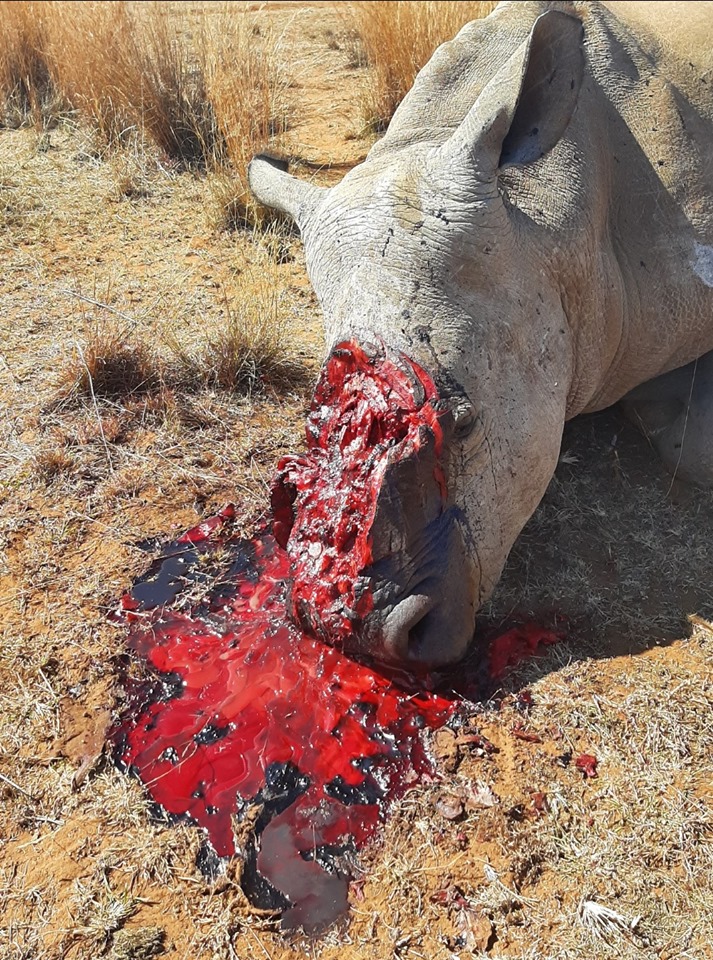
2- A RHINO AS FACELESS AS THE MEN WHO KILLED HIM

3- AN ANTI-POACHING UNIT ENGAGED THIS GANG BEFORE  THE IVORY COULD BE HARVESTED. TWO POACHERS DIED

4 – INTERNATIONAL ANTI-POACHING FOUNDATION FOUNDER DAMIEN MANDER

5 – WHAT GAME WARDENS LOOK LIKE IN AFRICA – THE BUSH IS A WAR ZONE

6 – SOME, LIKE THIS OLD BOY, DIE OF NATURAL CAUSES. PHOTO MARK BRIGHTMAN

7 – THIS ELEPHANT WAS KILLED WITH CYANIDE-LACED ORANGES. PHOTO STEVE ALENXANDER

8 – A POACHER WHO PAID THE ULTIMATE PRICE WHEN HE FIRED ON AN ANTI-POACHING UNIT

9 – COVERT OPS ARE ALSO A BIG PART OF THE WAR ON POACHING – MORE ON THAT LATER

10 – SILVANA OLIVO’S EXCELLENT BOOK, WHICH I WILL REVIEW SOON

134 total views, 2 today

AN UNDER-LEVER FAMILY HEIRLOOM

Announcement April 22, 2022


A WESTLEY-RICHARDS FAMILY HEIRLOOM
I J Larivers

(Originally published in MAN Magnum magazine)


The name Thomas Pakenham will be familiar to history buffs and natural historians as the author of such titles as The Scramble for Africa, The Boer War, and The Remarkable Baobab, to name a few. So when former Zimbabwe National Parks warden Chris Pakenham told me that he had a nice old Westley Richards underlever in .400/.360 that had been in the family for years, I thought Great! There’s a story here. The rifle was passed down through Chris’s family after his maternal great grandfather originally bought it from a gunshop in Port Elizabeth. Having put a couple of original Kynoch loads through it on the range one day, my curiosity was piqued.

Coined by James Purdey in 1856 to publicise his double rifles, “Nitro Express” cartridges were designed for use in the large bore, dangerous game hunting rifles of the day. Their name originated from the cordite propellant originally used, which consists of nitrocellulose and nitroglycerine. The “express” from express train, due to the formidably higher velocities available with cordite compared to earlier black powder loads. Many of the original Nitro Express cartridges – and especially the .470NE – remain popular today due to their effectiveness on dangerous game.

The .400/.360 Westley-Richards, similar to, but not quite the same as the .400/.360 Purdey (the difference chiefly being in the case rim thickness), appeared on the scene in 1900 as a rimmed cartridge intended for use in double rifles. Loaded with around 40gr of Cordite it sent a 300gr bullet downrange at just under 2000fps, or a slightly heavier 314gr projectile at closer to 1900fps. The energy is there, working out to 2,665 foot pounds and 2,518 foot pounds respectively for the two loads. Using Zimbabwe law as a benchmark, the .400/.360 hovers around the three and a half kilojoules mark, which makes it legal on Part C and Part D animals, which is just about everything but heavy, dangerous game. In the hands of a competent rifleman, of course – like Karamojo Bell – it would also be useable on the big bad stuff, and in the hands of a competent reloader, that four kilojoule mark for eland, giraffe and lion is certainly attainable.


The .400/.360s never really enjoyed the popularity of the more potent calibres on dangerous game, and the single-shot falling block has its limitations, but they did certainly fill a mid-range niche. Just a little later on, the Germans popularised their new 9.3 x 74R for use in single shot rifles, doubles and combination guns. It enjoyed more commercial success in Africa, and although underpowered in terms of many later cartridges and also much modern African legislation, it proved itself more than adequate on most species in the right hands. Significantly, the 9.3 x 74R cases are slightly longer than .400/.360WR hulls.

To most folks, these older calibres are merely curiosities, with very little in the way of modern application. The fact that ammunition may not be readily forthcoming for most of them exacerbates the problem. But…


Kynoch Ammunition, which is credited as being the originator of the classic British Nitro Express cartridges – working in collaboration with Eley – has brought back the Nitro Express brand to produce many of these now hard-to-find cartridges. With the use of blended, modern powders, Kynoch is able to match or surpass the ballistics of the original ammunition – and at safer pressures.

But, that’s not the only option. Chris Pakenham has formed .400/.360 cases by running RWS 9.3 x 74R brass through a standard Purdey .400/.360 sizing die and trimming to fit. He found it was necessary to slug the bore before shooting, as the old Kynoch .400/.360 Purdey NE softs and solids he came across were .367″, and groove diameters can vary from .363 to .369″.

Chris’s rifle itself, made by Westley Richards & Co. of London is a falling block single shot, first produced about 1909 on their “New Underlever” sliding block action in .360 Bore (.400/.360 23/4″ Nitro Express), and it was nitro proved for 41grains of Cordite with a 314 grain bullet. The barrel is 271/2″ and is serial-numbered to the action. It is equipped with their island rear sight base with one standing and two folding blades. These Westley Richards “New Underlevers” are not easy to find, but in 1909 a sporting gent could make his way to 178 New Bond Street in London and pull out nineteen pounds in British sterling and walk out the door with this very same Single Nitro Express rifle. If his tastes ran to a Willesden canvas case he merely added three pounds and if he were landed gentry with a cavalier lifestyle, he would presumably think nothing of laying down an additional five pounds to purchase the best solid leather case. The things folks take for granted!


Chris’s great grandfather, Guy Pakenham-Bean, who lived in Ferndale Valley near Hankey just outside of Port Elizabeth gifted the rifle to Chris’s father Aubrey, probably just after the Second World War. But at any rate, when Chris’s uncle Max drove up to Fort Victoria (now Masvingo) in 1950 in an Austin A40 – which must’ve been much more of an epic journey then than now, the border chaos and the present state of Zimbabwe’s roads notwithstanding – Chris’s Dad was already settled in Bulawayo, with the Westley Richards.

Who can guess what stories that rifle could tell about the intervening years? Not much is known for sure, though it would have put its fair share of venison on the table. And then, in the days before reloading, it would have been relegated to a corner of the gun safe as newer and “better” calibres emerged and times changed – single-shot rifles aren’t much use during an insurgent war. Then the dawn of a new millennium, and its fortuitous acquisition by Chris, who is a gun nut if ever there was one. It was not just a living embodiment of his family history, it was still a licensed, working rifle, and there was no reason it should not once again be put through its paces on the range.


Chris is currently the club reloading officer for rifle calibres at Cleveland Pistol Club in Harare. He has been very active over the years in the National Parks shooting proficiency examinations as both an instructor and an examiner, and he has done much to improve the candidates’ results by making high-quality gas-checked cast bullet ammunition available for practice. In addition, he has come to appreciate that far from being the anachronisms that too many shooters today believe them to be, cast bullets are real downrange performers in their own right.

Chris bought an RCBS mould for a 210gr gas-checked bullet, and began casting his projectiles from pure linotype; he then sized them to .359”. He acquired a set of Purdey reloading dies, and appreciating the similarity between the .400/.360 and the 9.3 x 54 – cases which for some reason are not that scarce in Zimbabwe – he went to work re-sizing and trimming the latter to fit in the Westley Richards rifle.

With the wide variety of excellent powders available from Somchem, Chris had very little trouble working up several nice, shootable loads for the old rifle, and he finally settled on 50.0gr of S365. Over the chronograph, these rounds averaged 2005fps, to give a muzzle energy of 1875 foot pounds, or just over two and a half kilojoules. Using a Hornady electronic powder measure, it takes a while for the charge weights to settle down with such a coarse-grained powder, but the points spread between the first rounds in the test batch was minimal – around ten feet per second. At fifty metres, the accuracy was initially not great – four to five inches, and certainly not what an ethical hunter would feel comfortable with – and this was probably stemming from the fact that not only was the original bullet weight much heavier at 314gr, but the cast bullets had also effectively been under-sized. So, Chris gave Don Heath at Norma a shout, and significantly better results were obtained by substituting jacketed .360” projectiles.


Chris and I both believe that there is a very limited enjoyment in owning a firearm that can’t still be taken out and put through its paces – sensibly. If there’s a strong historical link, so much the better. Right now Chris is weighing his options on any further refurbishment of the old gun. As can be expected, given its lineage, the sideplate screws are all pretty badly worn, but the finish and woodwork are pretty good and the bore is even better. With a lot else on the go, this fine old Westley Richards will continue to be be a work-in-progress, but hours of enjoyment on the range no doubt lie ahead.

Not to get too anthropomorphic, but I wonder what the old rifle thinks about all this?


135 total views, 1 today

RHODESIAN NATIONAL PARKS TRACKER UNIT

Announcement March 21, 2022

RHODESIA’S DEPARTMENT OF NATIONAL PARKS AND WILDLIFE MANAGEMENT AND THE VOLUNTEER TRACKER UNIT

A brief overview by Edward Ostrosky, previously Senior Ranger with the Department

“Undoubtedly, they rate a well-deserved place in the military history of Rhodesia.”  – Lieutenant General J S V Hickman.”

This document is intended to give those interested in Rhodesia’s military history a brief overview of the Department of National Parks and Wildlife Management’s Volunteer Tracker Unit (VTU).

Members of the VTU served with distinction throughout the bush war years but are seldom mentioned and never accorded the recognition they deserve as serving members of Rhodesia’s security forces. While many members of the VTU had served in Rhodesia’s army or police, others, such as myself, and all the game scouts, donned the uniform and went into combat as civilians, without extra pay, rank or even a force number.

Though some of this information comes from my personal experiences, I have consulted the books noted in the text. However, all errors and omissions are mine. I humbly apologise to the Volunteer Tracker Unit’s members, white and black, that I could not mention each of you by name and record your deeds as they deserve.

BEGINNINGS

The Department of National Parks and Wildlife Management can trace its roots back to 1928 when Ted Davidson was appointed as the first Warden of Wankie National Park. The Department of National Parks was established under the Ministry of Lands in 1949, followed by the creation of the Southern Rhodesia Game Department in 1952. In 1958 the Federal National Parks Board was established, and the Federal Government assumed control of Southern Rhodesia’s national parks. Meanwhile, in 1960 the Southern Rhodesia Game Department became a fully-fledged department under the Ministry of Lands, and in 1961 was re-designated the Department of Wildlife Conservation. The final act was to amalgamate the two organisations, National Parks and Wildlife Conservation, into the Department of National Parks and Wildlife Management (NPWLM). This was done in 1963. 

Rhodesia’s largest conservation areas and the rangers and wardens that manned them were mostly on international borders. Though National Parks had supplied trackers to Rhodesia’s military on an ad hoc basis, their direct participation in Rhodesia’s counter-insurgency war started with Operation Nickel in 1967.

A group of 79 insurgents crossed the border at Batoka Gorge and based up on the banks of the Deka River in Wankie National Park. They then split into two groups, one of 48 and another of 21.

Security forces engaged the groups on the Inyantue River and near Leash Pan, and the insurgents moved southward into the Tjolotjo Tribal Trust Land. National Parks game scouts assisted with tracking, and rangers Ronnie van Heerden and Willie de Beer located tracks of two terrorists. One terrorist was shot and killed by Ranger van Heerden.

The war intensified in 1973, and ranger Robin Hughes and Mike Bromwich were on attachment to the army. Hughes was killed in action on the 18th of October while involved in pseudo operation. Game rangers and scouts participated in other follow-ups with the Combat Tracker Unit and on an ad hoc basis in their regular areas of operation.

In 1973, Ranger Dave Scammell found terrorist tracks in the Zambezi Valley, initiating Operation Caldron. (Detailed accounts of these and other operations can be found in National Parks and Wildlife Management, Rhodesia and Zimbabwe 1928-1990 by Mike Bromwich. Masodja and The Saints, both by Alexandre Binda.)

A visitor’s vehicle detonated the first land mine in Mana Pools National Park on 30 August 1972, and from then onward, Mana was subjected to frequent incidents of terrorism. In order to maintain a presence on the Zambezi River, work started on Fort Mana in June 1974. From then on, Mana would be a key but costly asset.

In early 1974, insurgents attacked D Camp, downstream of Mana, and ranger Richard Aylward was seriously injured when his vehicle detonated a land mine a few days later. The following year ranger Mike Jones was critically injured by a mine at Vundu camp while ranger D. Winhall received minor shrapnel wounds. Elsewhere, game scouts Smuyamba and Angus were shot and killed while on duty.

THE VOLUNTEER TRACKER UNIT

National Parks trackers were called on to assist the Rhodesian Army with follow-ups throughout the war. However, in 1972 Warden Paul Coetzee and Lieutenant D. Parker of the Rhodesian Light Infantry formalised arrangements, and the National Parks Volunteer Tracking Unit was born. Initially, Warden Coetzee controlled deployments from Sinoia, but in 1976 control moved to Head Office and fell under the control of Roy Killick.

Though there were endless variations, members of VTU sticks usually reported to Roy Killick in Salisbury and were deployed to Forward Airfields or Joint Operational Commandss (JOC) as directed by Combined Operations HQ.

All VTU members wore regular Rhodesian army camouflage uniforms. Many rangers chose to use chest webbing, with regulation web belts and accoutrements. The trick was to travel light but have at least a sleeping bag, a gas cooker, and enough food for a meal or two. By 1976 all VTU members were armed with 7.62 mm, FN FAL rifles and four twenty round magazines. In addition, supporting units supplied hand grenades, smoke grenades, rifle grenades and additional medical kit as required. When operating independently in 1979, VTU sticks sometimes carried captured weapons such as RPD light machine guns.

VTU patrols were on constant standby for deployment to incursions, farm attacks, ambushes, land mine incidents, abductions or other incidents as directed by the JOC commander. As the VTU stick needed to get onto tracks as soon as possible, they were usually deployed by helicopter. However, recovery to base was sometimes problematic and depended on available transport. In one case,  after a lengthy follow-up, senior ranger Ron Wienand, the writer, two trackers and the 1 Independent Company (Wankie) backup stick caught a lift with a convoy of passing fishermen.

Another difference between members of the Volunteer Tracker Unit and territorial units was that, at the conclusion of their call-ups, most VTU members returned to their regular duty stations in operational areas. Back at base, they did the same work, but without backup.

Two VTU members were killed in action during 1976. senior ranger Richard Smith was killed in action on 20 February while on a VTU call up with the RLI. According to one account of the Battle of Chibara Hills, the initial follow-up group consisted of eight men of 3 Troop and three National Parks trackers led by Richard Smith. The VTU stick and its backup were ferried forward to join 4 Troop and again to join Ian Scott’s 1 Troop. The bush was extremely thick, and two 1 Commando trackers, Sergeant Pete White and Corporal Cookson were both killed by unseen enemies. Soon afterwards, 1 Troop was ambushed, Trooper Diedericks was killed, and Ranger Smith, who was next to Scott, was mortally wounded. He died of his wounds in the helicopter on the way to Karanda Mission.

Ranger N J R (Nick) Gregory died from wounds received in action on 9 November 1976, while on a three-week VTU call up with senior ranger Charles Mackie. They were operating with 1 Battalion Rhodesia Regiment and the Rhodesian Light Infantry west of Mukumbura. According to Charles Mackie, it was dark, and they had become separated when a bullet hit Gregory’s shoulder and penetrated his lungs. Unfortunately, darkness and rain prevented immediate CASEVAC, and he died of his wounds en route to Mount Darwin. Bodies of 23 insurgents were counted the next day.

National Parks casualties continued to mount. On 20 December 1976, Chizarira National Park’s headquarters was attacked and destroyed. Fifteen staff members were abducted and were loaded on inflatable boats. However, the Kariba Boat Squadron intercepted and sunk the boats, and two staff members were drowned. During 1977 game scouts Jolamu and Ndabezinhle were shot dead by insurgents at Matetsi, and game scout Marume was abducted and murdered while on leave.

Though Fort Mana held the line on the Zambezi, it had to be resupplied by way of a gravel road that ran through dense mopane forest. On 20 March 1977, Ranger Gerry Bell and game scouts Mafairos, Marufu and Zovoro were killed during an ambush on the Mana Pools access road, and on 25 December 1977, ranger Minnaar was killed in the same area.


Wankie was also a target. On 12 January 1978, research technician Russell Williams was killed in action while participating in a follow up near Wankie Main Camp. Then, in March 1978, VTU members senior ranger Charles Mackie and Tom Fynn set off with a scratch force of eight to check for insurgent movements in the Mitswiri Area. The ill-equipped patrol was ambushed, and Charlie Mackie was seriously wounded by an M60 rifle grenade in the opening salvo. However, despite both rangers being out of action, the scouts, armed with Fynn’s damaged single shot FN and their bolt action Lee Enfields, managed to hold off repeated attacks, and the ZIPRA force withdrew.

In late 1978, due to complaints by VTU members about the quality of backup provided by some security force elements, Combined Operations agreed that VTU call-signs would track for the Rhodesian Light Infantry only. The move was welcomed by many, but the RLI seldom needed traditional ‘Sparrow’ trackers when engaged in Fire Force activities.  However, the usefulness of traditional tracking units like VTU was soon re-evaluated. From May 1979, VTU patrols were deployed to selected National Parks bases in border areas. They actively patrolled, supported local operations and tracked for other units when called to do so. Marongora was one such base, and it was due to this final change that Warden Oliver Coltman’s VTU stick was at Fort Mana in May 1979.

ZIPRA’s 17 May 1979 attack on Fort Mana was the longest sustained attack on a Rhodesian base during the entire war. The attack started with a bombardment of the Mana complex with B10 recoilless rifles, 82 mm mortars and 14.5 mm AA guns. Fortunately, the staff complement of rangers, scouts and NS was supplemented by the presence of warden Oliver Coltman and his VTU team. Nevertheless, shelling and ground assaults continued through the night while the defenders replied with rifle, Bren, MAG and 60 mm commando mortar fire. Fort Mana held, and in the morning, a Dakota dropped a resupply of ammunition by parachute.

During subsequent sweeps, seven dead insurgents were found, including one that had reached the perimeter fence. Seventy-six firing positions were found along with blood trails, bloody bandages and wheel tracks of the B10 recoilless rifle. In a subsequent follow-up by Provincial Warden Ronnie van Heerden’s VTU patrol, the writer and trackers located the insurgent’s forward base, and various items were recovered. Later intelligence indicated that a further fifteen ZIPRA died of wounds sustained in the attack. 

Perhaps the last contact involving a regular VTU call-sign occurred on 11 October 1979 in the Zambezi Valley, along the Mashayenyi River below Nhawa Hill.

The call-sign, consisting of Ronnie van Heerden, Ed Ostrosky, Gorden Putterill, Phungwe and Goliad engaged a ZIPRA unit of unknown size, killing one, and capturing one PPSh 41 submachine gun and seven rucksacks loaded with AK ammunition, M60 rifle grenades and land mines. At the end of the deployment, John White’s VTU team took over. However, they were recalled a few days later to attend the funeral of Senior Ranger Tim Wellington (Territorial SAS), who had been killed by an elephant in Wankie.

While the National Parks Volunteer Tracker unit stood down when the cease-fire took effect in December 1979, thousands of insurgent troops soon occupied the assembly point at Rukomechi, known as Papa Camp. When a patrol reported poaching and the possible wounding of a rhino, Senior Ranger Nevin Lees-May and Rangers Andy Gibson, Ken Jones, and several game scouts went to investigate. They were ambushed by ten or more insurgents near Nyakasikana, and in the ensuing shoot-out, one ZIPRA was killed, and one was captured. The next day a trailer, towed by a Water Development vehicle, detonated a land mine on the Nyamomba Road, and NPWLM staff went back to using hardened, mine-protected vehicles. The situation remained tense until the insurgents were moved to Mashumbi Pools in the Dande Tribal Trust Land at the end of August 1980.

BOOK REVIEW

NATIONAL PARKS AND WILDLIFE MANAGEMENT, RHODESIA AND ZIMBABWE, 1928-1990

 By Mike Bromwich

 Rhodesia (later Zimbabwe) probably had the African continent’s flagship Game Department for almost half a century. Zimbabwean national parks like Hwange, Gonarezhou and Matusadona remain prime, untamed African wilderness even today. .

Rhodesian National Parks attracted, or shaped, the best and the brightest. Men like Ted Davison,

Ron Thomson, Rupert Fothergill, Clem Coetsee, Ollie Coltman, Rowan Martin, Glenn Tatham, Willie Nduku and Norman Monks who were and are legends in African conservation.

Mike Bromwich was one of them. One of this book’s strong points is that it is written from a number of different perspectives by the people who were on the ground, and had seen and done it first-hand.

The book is about a sort of renaissance period wherein Africa’s colonial ‘game departments’ were evolving into true custodians of their countries’ natural heritage, rather than merely being some form of liaison division between wilderness and farmers. Also, the cut-off date for the period covered, 1990, marks a time of great turmoil within the department, and indeed within the Zimbabwe government. There are still many stories that need to be told about those days. I have had the pleasure to know and work with men like Ollie Coltman, Howard Shackleton and Glenn Tatham, and to shoot and socialise with the likes of Chris Pakenham and Ken Worsley over the past thirty years, so it was a real pleasure for me to review this work. This book is unique in that it is more than a story of the African wilderness and wildlife, it is a story of people: the people who pioneered the concept of sustainable management and use of game.

In his foreword, Dr Colin Saunders, who headed the National Parks and Wildlife board from 1975 to 1987, and who knew most of the key players, emphasizes the hopes, dreams and aspirations of the myriad people who made the whole system work. As he says, “They led very full and interesting lives.” (Saunders’s own book Gonarezhou – A Place for Elephants is well worth reading.)

DL order flyer_2020 2nd edition


117 total views, 0 today

How to choose a rifle scope

Announcement January 13, 2021

Hunting season will be here in no time and with that, many new hunters are preparing for their first hunt. But a big question is; what rifle scope should I purchase?

I just purchased my first rifle about a month ago now and before doing anything else with it, I wanted to get a scope for it. As I started looking online at available scopes I quickly realized that I had no idea where to begin and what anything really meant. So, I did some researching and talked to colleagues, read articles and listened to some Silvercore Podcast’s since we had an optic specialist on talking about Vortex Optics.

But doing all that, it took me a while to really figure out what it was that I was looking for. I’m the type of person who needs to know every detail when it comes to buying something, so in order for me to make a properly educated decision I felt it was really important that I understood all the components to an optic, what the different numbers meant, and how they worked.

Being passionate about the industry I’m in, I wanted to take the time to share this new knowledge I’ve gained in my journey of learning about optics. So let’s get right into it by reviewing the different components that I’m going to go over with you today.

  1. Magnification numbers
  2. Objective Lens
  3. Fixed Power Vs. Variable Power
  4. Reticle / Crosshair
  5. Bullet drop compensation
  6. Light transmission
  7. Eye Relief
  8. Parallax
  9. Field of View
  10. Adjustments
  11. Lenses
  12. Coatings

Magnification numbers


If you’ve checked out any of the rifle scopes either online or in a store yet then you’ll have noticed that they all start with numbers that look something like this 3-9×40 or some other numbers with the same format ie. #-# x #.

The number range of 3-9 is your magnification ability. So for example, in a scope which has a magnification range of 3-9, this means you are able to magnify and enlarge your target starting at 3 times it’s size, up to 9 times it’s size. 3 being your low power and 9, your high power.

There are many different ranges you can find when it comes to rifle scope magnification, but bigger isn’t always better.

Rather than purchasing a rifle scope based on a larger magnification range and thinking that if you get something with a larger magnification ability, the better off you’ll be, decide first what you plan to do with your rifle. There’s no point in spending extra money on a feature if you’re not going to use it. But thinking long term is also a good thing. Personally, I decided on a scope with a 3-15 magnification power because I plan to go hunting, but I can also see myself getting into precision rifle shooting in the future and if I’m spending a good chunk of change on a high quality optic, if possible, I’d like it to be a multi-purpose use optic.

Objective Lens


The objective lens is the lens found at the end of your scope (the one you look into is called your ocular lens). The 40 from 3-9×40, refers to the diameter of the objective lens and is in millimetres. The larger this number, the larger the lens itself is.

When choosing the size of your objective lens an important consideration will be when you plan to use the scope. Will there be low light or will it be used only during the middle of the day when there is plenty of light? The larger the objective lens, the more light can be transmitted which can help to make a clearer image in lower lighting situations.

The larger you go with your objective lens however, the heavier it will be and if you are going hunting and trying to pack light, this may not be the most practical.  You’ll also find yourself needing higher mounting scope rings which could potentially be harder to find and it can also affect your cheek and weld method causing you to either need an adjustable cheek rest, or a stock specialized for your firearm to allow for more comfortable shooting.

If you don’t plan to be shooting during dawn or dusk when light conditions aren’t as ideal, then you can get away with a smaller objective lens. Majority of scopes out there are between 32 and 44 mm.

Fixed Power vs Variable Power


We’ve already discussed the magnification numbers, but we only discussed the variable power. There is also something called fixed power, this means that there is no range of magnification on that particular scope.

An example of this would be 4×32. This means that the scope has the 4 power magnification or having the target appear 4 times its typical size. There is no adjustment option for this.

As with anything, there will pro’s and con’s with one option vs another. One of the pro’s of a fixed power scope is that there is less fiddling around with magnification as it’s already done for you. This provides a level of assurance in not having to worry about making a mistake in your magnification adjustments and then missing your target.  It’s also going to cost less which is great if you have a fixed budget.

Possible con’s are that because the magnification is fixed, you aren’t able to adjust it to a target further away or that may be closer. For this reason variable scopes can be more desirable.

Another pro to a variable scope is that it can ultimately be used anywhere because of the ability to adjust your magnification.

Reticle / Crosshair


The reticle or crosshair is the point in which the vertical and horizontal lines meet up to make a cross or “+”. This is the aiming point. There are many variations of reticles including, but not limited to fine crosshair, duplex crosshair, german reticle, target dot, and mill-dot.

A consideration is the reticle’s focal plane. The reticle will either be located at the front focal plane, also known as the First Focal Plane or FFP. Or it can be located at the rear focal plane, also known as the Second Focal Plane, or SFP. The difference is that with the SFP, the reticle will remain a constant size whether the target grows larger due to increased magnification, or shrinks due to decreased magnification. If you purchase a FFP, the reticle will increase with magnification, or decrease with lower magnification.

Second Focal Plane scopes are not as expensive as those that are First Focal Plane, but depending on what type of shooting you plan to do, it may be worth wile purchasing one on the FFP. Wether you buy a scope that is FFP or SFP will depend on your personal preference, and again, what you plan to do with your rifle.  Because I’m looking at getting into longer range precision shooting and I like that the reticle size increases with magnification, I felt the FFP would be a good choice for me. But purchasing a FFP scope may not be the best option for you if all you plan to do is go shooting at a max of 100 yards.

Bullet Drop Compensation


Some rifle scopes have a bullet drop compensation (BDC) feature, this can also be referred to as ballistic elevation. This is actually something that’s built in to your reticle and it compensates for the effect of gravity. In order for this to be accurate, it needs to be specifically tuned for the particular ballistic trajectory of a particular combination of gun and cartridge at a predefined muzzle velocity and air density.

Nikon has created the SpotOn technology which allows you to go to their website, input the type of scope you have, followed by the bullet size, manufacturer, grain amount, bullet style, weight, and how far you’re shooting, scope magnification and it will show you where to have everything lined up on your reticle. It’s pretty cool, but keep in mind that this doesn’t account for windage.

Light Transmission


This is the rifle scope’s ability to transmit available light and give a bright and sharp image. Factors that can affect brightness include objective lens diameter, magnification, type and quality of the objective lens glass and the type of lens coatings.

Eye Relief


Eye relief is the space between the ocular lens and where your eye is placed. This is important in order for you to prevent ‘scope eye’. This occurs when you don’t have proper eye relief and your scope hits the area around your eye from the firearms recoil after a shot and can be pretty painful. Eye relief also plays a role in preventing eye strain and ensuring a clear view.

The amount of eye relief you need is dependant on the firearm you have as well as the magnification of your scope. The more powerful a firearm, the more recoil, then the more eye relief distance you’ll need. That said, the higher the magnification of your scope, the less eye relief you will need.

Typically 4 inches is the average eye relief distance needed.

Parallax


Parallax occurs when your reticle and the target don’t line up within the scope and can create an unclear sight picture. You can spot this by moving your eye or head around whilst peering into the scope; if the reticle moves around the target you’re aiming at, then you are able to confirm that it is a parallax issue you’re dealing with. More on this and how to fix it below in the section on adjustments.


Field of View


Field of view (FOV) simply put is the area which you can view through your optic. As you increase magnification, the field of view decreases. FOV is mеаѕurеd in feet at 100 yards. To explain, if a rifle scope states that the field of view is 42ft at 100 yards, that means you can view a 42 foot scene from left to right at 100 yards. For scopes that have a variable magnification power you’ll likely find a range for the FOV, for example, 41.2-8.6 ft/100 yds. This accounts for the magnification variation which if it were 5-15 then at 5 power you’ll see a scene of 41.2 across and at 15 power you’ll see a scene of 8.6ft across.  

Adjustments


There are many adjustments which can be found on a scope. These include the following:

  1. Windage
  2. Elevation
  3. Parallax
  4. Illumination
  5. Magnification
  6. Diopter

Windage and Elevation


Windage is the horizontal adjustment on your scope whereas Elevation is the adjustment of the vertical direction.

Parallax


These adjustments are made when parallax is an issue. This is done in steps; obtain your sight picture by aiming at your target, then adjust your parallax until the reticle becomes clearer. You want it as clear and crisp as possible. Then, while lifting your cheek off the stock of your firearm, continue to look through your scope lens. Look around and see if the crosshairs move off target when you do. If they do, continue to adjust until they stay focused and centred on your target, even when you move your eye around. Once there, lock these into place.

Illumination


Illumination adjustments can be useful in controlling the level of brightness, especially when in low light conditions as it increases the illumination intensity for the lit parts of the reticle/crosshairs.

Magnification


This adjustment is exactly like it sounds, allowing you to adjust your level of magnification (provided you have a variable power and not fixed) with the given range of magnification power on the rifle scope you have.

Diopter


The Diopter adjusts focus of the reticle, this is not to be used to focus on an object.  While it will focus on the object, you don’t want to because it will effect the focus of the reticle, which is on another plane.

Stare at a blank blue sky or single colour wall, bring the scope up and quickly look through.  Don’t stare, your first glance is what you are looking for, then take the scope away, adjust the diopter.  Repeat. Until the reticle is crystal clear.  Your eye very quickly adjust focus so you want the reticle clear at a relaxed eye focus at a neutral object so your eye has only one thing to try and view. Then you use your parallax adjustment to reduce parallax which, typically brings your target into focus.


Lenses


Typically, you’ll find about eight lenses on a rifle scope (this includes the obvious ocular lens and the objective lens), however there can be more, or less.

Coatings


Majority of scopes will have some sort of coating on the lens and near all rifle scopes are fogproof and waterproof. The coatings available will vary and typically, the more coatings you have, the more expensive the rifle scope will be. Coatings can provide a clearer and brighter sight picture as well as reduce glare, but having multiple coatings doesn’t necessarily mean that it will be better than one with a single coating; this will depend on not only the coatings but also the glass quality.

There are 4 types of coatings commonly found on rifle scopes, these include the following:

  1. Coated – This means there is a single layer coating on at least one of the lens surfaces.
  2. Fully Coated – This means that there is a single layer of coatings on all air to glass surfaces.
  3. Multicoated – This means that there is more than one layer of coatings on at least one lens surface.
  4. Fully Multicoated – This means there are multiple layers of coatings on all air to glass surfaces.

Conclusion


This information should give you a good basis of understanding to be able to determine what type of rifle scope you’ll be looking to purchase. However, if you are looking for additional information, I’d definitely recommend listening to The Silvercore Podcast, more specifically, these episodes:


In addition to The Silvercore Podcast, we also have our YouTube channel where we’ve shared videos on how to mount a rifle scope as well as sighting in a rifle the easy way which will come into use after you’ve purchased your rifle scope.

Happy scope shopping!

Corrine Owerko

249 total views, 1 today

Emergency Preparedness and Becoming a Prepper

Announcement January 13, 2021

In this episode of The Silvercore Podcast, Travis Bader speaks with Ian Jones from The Canadian Prepper Podcast and discusses how he got into prepping and what he would recommend to others to have in order to be prepared for any eventualities.

If you have a story that would be of value to the Silvercore audience, or know someone who does, email us at podcast@silvercore.ca.  We would love to hear from you!


If you know someone who would enjoy our podcast or YouTube videos, or anything else that Silvercore offers please share it with them.  Please engage us with your comments, questions and suggestions likes, shares and subscriptions.  If you have a story to tell that our audience would appreciate, or know someone who does, let us know.  Your interaction will help us in providing the best possible future content.

You can listen to episode 24 of our podcast on Podbean, Apple iTunes, YouTube, Spotify, SoundCloud, Google Podcast, and Google Play. All you’ll have to do is search for ‘The Silvercore Podcast.’ 


If you have any feedback or questions that we can address, please reach out to us via social media or at 1-855-771-5837 or info@silvercore.ca. Finally, don’t forget to rate, review, and subscribe to the podcast, and while you’re at it, follow us on FacebookInstagram, and Twitter!

Travis Bader

Join the Silvercore Club!

Looking for Show Notes of this Podcast? Read them Here!

238 total views, 0 today

How to get a gun in Canada

Announcement January 13, 2021

So you want to get a gun and go shooting at the range, or maybe you want to go hunting, or get into competition shooting. It can be tricky to navigate what is legally required of you to get a gun in Canada.


First thing’s first, you need a firearms licence. There are many terms people use for this, but the proper name is a Possession and Acquisition Licence, or PAL. (previously known as a POL or FAC, more on these terms here).

In order to obtain your licence to buy a gun, you need proper training. In Canada, the RCMP and Canadian Firearms Program (CFP) require individuals to take a firearms training course called the Canadian Firearms Safety Course (CFSC).

This course will teach you the different types of firearms, firearm actions, how to use the firearm, how to identify the proper ammunition that can be used with that particular firearm, what ammunition types are available and what uses they are commonly for. You will learn the laws and regulations around firearms, your firearms licence, what is required of you as a responsible and legal firearms owner, and what conditions you must follow when purchasing, possessing, transporting, storing, or displaying your firearms. You also get the chance to practice with deactivated firearms, giving you the opportunity to see the firearm actions in use and be able to load, and unload them in a safe manner.

Depending on the firearm you wish to purchase, you may just want the CFSC, or you may wish to also take the Canadian Restricted Firearms Safety Course (CRFSC) as well if you want to buy a handgun (the CFSC is for long guns like rifles and shotguns).

At the end of your training, you are required to complete a written examination which includes true and false and multiple choice questions. You will be required to obtain 80% or higher to pass that written component and move on to the next phase of your examinaton. Pending a successful written exam, you will then show your instructor how to identify the firearms, ammunition,  load and unload the firearm, all while doing so in a safe manner. This is the practical examination and it also requires that you pass with a minimum of 80%.

So you’ve gotten your firearms training, passed examinations, whats next? Well, you will be required to apply with the RCMP for your PAL with your personal information and include proof of your training (these are provided in form of course reports). In addition, you’ll be required to supply information about your current or past conjugal partner (if any) for the past 2 years, 2 references, a photo together with a photo guarantor and your application fees.

Once your PAL application has been submitted, this process can take between 3-6 months prior to being approved. If approved, then you’ll receive your firearms licence in the mail and you can now go out and legally buy a gun.


So, to recap, these are the 5 simple steps required to purchase a firearm.

  1. Take the CFSC training
  2. Pass examinations (pro-tips on how to do this can be found here)
  3. Apply for your PAL
  4. Get your PAL in the mail
  5. Go buy a gun

282 total views, 0 today

How to stay safe in Bear Country

Announcement January 13, 2021

Whether you’re planning your next camping trip, going for a hike up a local mountain or going hunting, you want to be prepared for the unexpected. As Benjamin Franklin once said “An ounce of prevention is worth a pound of cure”

One of the first, and best things you can possibly do to protect yourself from a bear encounter is avoidance. There are two types of avoidance:

  1. Initial planning, and
  2.  Site specific


What do we mean by these? Well, your initial planning should consist of creating a bear map to identify that are considered to be high use areas of bears. Then, avoid these areas as much as possible. If you are able, it’s recommended that you perform a helicopter fly over beforehand and work in pairs.

When being site specific, you’ll want to be able to recognize the bear sign and understand the bear behaviour(s), then you can employ your techniques to make sure that your presence is known.

If you see a bear and its unaware of you, this is your best opportunity to still avoid the encounter by quietly leaving. Don’t yell at a bear if it hasn’t given an aggressive signal. This is really important as it could trigger an attack.

In the event of an encounter, do your very best to avoid anything close range and that could be a surprise to the bear. Many people employ the use of bells to alert bears of their presence. Although this is a good idea, these are ineffective when there is high wind or river sounds because they could mask the sound of the bells. Try giving more than one indicator that you are in the area as many animals will wait for a second sensory input prior to feeling.


If you’re planning to be in an area that has the chance of bears being around, we highly recommend taking the time to learn more about bears and their behaviour and signs.

Silvercore’s Online Bear Defence course was created in partnership with James Gary Shelton, the bestselling author on bear behaviour. Many students choose to take this online course to complement their training in conjunction with Silvercore’s Bear Defence Shotgun Course. This in depth online training will lead you through the psychology of a bear and their signs and identification thereof.

You’ll have the opportunity to learn more about encounters and avoidance strategies as well as survival tactics if in the event of an unlucky bear attack. We also lead you through the various bear protection devices including bear spray, firearms and the use of dogs.

Looking for a glimpse of what this course is like? Try our free demo.

Need to be prepared? Get started with the full course!

258 total views, 1 today

What is a Range Safety Officer (RSO) and how do I become one?

Announcement January 12, 2021

Have you ever heard the term RSO, or Range Safety Officer? It’s exactly like it sounds, someone who is in charge or overseeing the safety of individuals at a Range (or Shooting Club), also known as range users.

In addition to overseeing safe shooting procedures, an RSO will also need to know how to deal with malfunctions,  emergency situations as well as organize the procedures when dealing with an emergency. They may also organize range activities and enforce range rules during these events.

It is important that they also know and understand the legal aspects and what is required of them as it pertains to record keeping and reporting.

So what do you need to become a fully trained and certified Range Safety Officer?

Well, first a valid firearms licence, also known as a PAL is required. If you don’t already have this, the Canadian Firearms Safety Course is required to obtain this licence.


Having the knowledge to be a safe range user and know the concepts behind how ranges work will also be required as well as extensive firearms experience. Being physically and mentally fit, being able to pass a criminal record check and vulnerable sector check will also be required. Lastly, valid first aid training which is suitable for the position of a range officer.

After you have your PAL, the knowledge to be a responsible and safe range user, you’ll also need to understand the duties and responsibilities of a Range Safety Officer. Thereafter you will undergo a practical test to demonstrate your ability to manage a firing line. This is done under the supervision of your ranges Chief Range Officer (CRO).


If you are looking to be certified as a RSO at your local range, we recommend taking the Silvercore Online Range User course followed by our Online Range Safety Officer course. These courses provide you with the theoretical knowledge needed to be successful in your practical examination with your local range’s CRO.


288 total views, 0 today

What do you need to go fishing?

Announcement January 12, 2021

So you want to go fishing? With modern technology and the internet, sometimes finding the information you need that can be considered reliable and trustworthy can be difficult. This is why Silvercore is here to guide you through what you need to go fishing.

First, decide what type of fishing you want to do. By that we mean, would you like to fish for freshwater fish, also known as non-tidal, or would you like to fish for saltwater fish, also known as tidal. The regulations for these types of fishing are different. Non-tidal fishing is provincially regulated, whereas Tidal fishing is federally regulated.

Freshwater Fishing (Non-Tidal)

In British Columbia, if you plan to go for freshwater fish, you will need a Basic Licence, also known as a Non-Tidal Angling Licence. This is for every angler who is 16 years of age or older and will allow them to fish in the non-tidal waters of beautiful BC.

In addition to your Basic Licence, you may also need a Conservation Surcharge Stamp, a White Sturgeon Conservation Licence, and / or a Classified Waters Licence.

Why? Glad you asked. There are two reasons why these are required. If you plan to fish for a specific type of fish such as Steelhead, non-tidal Salmon, or Sturgeon, or you’re going to specific locations that are regulated as Class I or Class II Classified Waters.

Purchasing these licences can be done either online through the BC Recreational Freshwater Fishing website, or from any vendor who offers this service.

Saltwater Fishing (Tidal)

If you plan to go fishing in the saltwaters of BC , you’ll need a Tidal Waters Fishing Licence. Although free for juveniles (under 16 years old), you’ll still need a licence for them which can be done online under your account.

This licence also has the option to purchase a Salmon Conservation Stamp. In the event that you catch Salmon in saltwater, and you intend to retain it, then you must purchase this stamp. This is not required if you catch and release. The fees for the Salmon Conservation Stamp help generate funds which are provided to the Department of Fisheries and Oceans to the Pacific Salmon Foundation. This helps to support Salmon restoration, stewardship and enhancement projects in British Columbia.

These licences can be purchased through the Department of Fisheries and Oceans of Canada website or through an Independent Access Provider.


Conclusion

When you plan to go fishing, be sure to always check for new regulations as things change from time to time.

If you’d like to know more about Freshwater Fishing such as the species, regulations and limits, equipment and setup and use thereof and more, we would recommend signing up for our online Pacific Northwest Fishing course.

This course was designed with the beginner in mind and is a must for anyone looking to get into the sport of freshwater fishing.   This is a veritable A to Z of everything a new angler needs to know and includes information on how to safely and legally fish in beautiful British Columbia.

To provide you with the best, Silvercore’s course was created in partnership with the world renowned angler, guide and conservationist April Vokey.

Try Our Free Demo

270 total views, 0 today

Silvercore Podcast Ep. 23: Blood Tracking and Science Dogs

Announcement January 12, 2021

In this episode of The Silvercore Podcast, Travis Bader speaks with Lindsay Ware of Science Dogs of New England situated in Maine, USA and discusses how she got into tracking animals for hunters with the help of dogs, different signs and evidence to look for when tracking and how you can teach your dog to track as well.

If you have a story that would be of value to the Silvercore audience, or know someone who does, email us at podcast@silvercore.ca.  We would love to hear from you!


If you know someone who would enjoy our podcast or YouTube videos, or anything else that Silvercore offers please share it with them.  Please engage us with your comments, questions and suggestions likes, shares and subscriptions.  If you have a story to tell that our audience would appreciate, or know someone who does, let us know.  Your interaction will help us in providing the best possible future content.

You can listen to episode 23 of our podcast on Podbean, Apple iTunes, YouTube, Spotify, SoundCloud, Google Podcast, and Google Play. All you’ll have to do is search for ‘The Silvercore Podcast.’ 


If you have any feedback or questions that we can address, please reach out to us via social media or at 1-855-771-5837 or info@silvercore.ca. Finally, don’t forget to rate, review, and subscribe to the podcast, and while you’re at it, follow us on FacebookInstagram, and Twitter!

Travis Bader

Join the Silvercore Club!

Looking for Show Notes of this Podcast? Read them Here!

242 total views, 1 today

How to import and export firearms in Canada

Announcement January 12, 2021

Many times throughout the year Silvercore gets asked “How do I import (or export) a firearm in Canada?“. We wanted to provide you with all the in’s and out’s of importing and exporting firearms in Canada and make it smooth sailing for you to safely, and legally get your firearm into (or out of) Canada.

If you’re new to Silvercore and our Blog, be sure to check out all the other useful content we have! Be sure to subscribe to our Newsletter where you’ll find all the most relevant and new content from our YouTube Channel, Podcast, Blog, Online Courses, Gun Club and much more.


What do you need to Import (or Export) a Firearm in Canada? 

If you want to import or export your firearm, the first thing you’ll need, regardless if you are dealing with a Non-Restricted or Restricted Firearm is to be 18 years or older and you must have a valid Possession and Acquisition Licence, also known as a PAL (more firearms acronyms, terminology and what they mean can be found on our blog here). And incase you’re wondering, neither Canadian residents, nor visitors are allowed to import prohibited firearms newly acquired outside of Canada under any circumstances.  


What are the legal requirements for importing and exporting firearms?


There are a few different legal requirements which need to be followed when it comes to importing or exporting firearms. The first we’ll touch on those that relate to Canada. There are governing bodies that have their own regulations which need to be followed. In this section we will review the following:

  1. Canada Border Services Agency, or CBSA
  2. Global Affairs Canada
  3. The Criminal Code and The Firearms Act.


So let’s begin!

1. CBSA, Importing and Exporting Firearms, Weapons and Devices.

Review Memorandum D19-13-2, effective as of May 29 2019. This document not only goes over a briefing of things most recently changed, legislation, the definitions of things like Action, Ammunition, Authorization to Carry (ATC), Authorization To Transport (ATT) and more, but also describes in great detail prohibited weapons and ammunition. Knowing what is considered prohibited will save you a great deal of grief when importing or exporting a firearm.

Additionally, you’ll find the import and export procedures. But we’ll keep this simple and break it down for you!

If importing a Non-Restricted Firearm

In addition to the 18+ age and valid PAL which has the proper authorization for the class of firearm which you plan to import, you’ll also need the following:


      1. Verify if you need an import authorization from Global Affairs Canada, more on that below. 

If importing a Restricted Firearm

In addition to the 18+ age and valid PAL, you will also need the following:


      1. Be authorized owner to which the Restricted firearm is registered to with the Canadian Firearms Program, or CFP and have your Firearm Registration Certificate, 
      2. Have a Long Term Authorization to Transport, or ATT in order to Transport the firearm (this is obtained by being a member of a recognized gun club or range), 
      3. Obtain an import authorization from Global Affairs Canada.

Something worth noting is that you can generally only import a restricted firearms if you are able to show that you have a need for that firearm, this could be something such as needing it to be able to take part in an organized target-shooting event.

Ensure you are properly covered, Join The Silvercore Club!


2.  Import Controls and Import Permits handled by Global Affairs Canada


Apply for an Import Permit. In order to apply for this you’ll need to  complete an Application for Import/Export Permit EXT-1466. (you’ll need Adobe Reader to load this file)

Be sure to include your application with a cheque for the corresponding total value of goods otherwise the permit will not be issued. The fee schedule can be found here.


3. The Criminal Code and the Firearms Act.


You’ll need to keep in mind the Criminal Code and the Firearms Act as this outlines the offences you could face if you import or export a firearm illegally and who is authorized to import or export. More on this below.


As a final note on things you need to do, don’t forget that you will also need to keep in mind the country where the firearm is coming from, as well as any other country the firearm will pass through and their legal requirements.


What offences could be faced for importing or exporting firearms illegally?


We’ll keep the legal jargon out of this summary- if you want to read that you can find it here in the Criminal Code of Canada.


Importing or exporting knowing it is unauthorized

The punishment when it comes to a firearm is imprisonment for up to 10 years and minimum punishment of 3 years (if first offence), or of 5 years (if second or subsequent offence)

In other cases of an indictable offence,  imprisonment up to 10 years and a minimum punishment of imprisonment of one year.

Unauthorized importing or exporting

Imprisonment for up to 5 years for an indictable offence, or if guilty of an offence punishable on summary conviction.

Who is authorized to import and export a firearm?

As per the Firearms Act, Authorization for non-residents who do not hold a licence to import firearms that are not prohibited firearms

35 (1) A non-resident who does not hold a licence may import a firearm that is not a prohibited firearm if, at the time of the importation,


(a) the non-resident

(i) is eighteen years old or older,
(ii) declares the firearm to a customs officer in the prescribed manner and, in the case of a declaration in writing, completes the prescribed form containing the prescribed information, and
(iii) in the case of a restricted firearm, produces an authorization to transport the restricted firearm; and

(b) a customs officer confirms in the prescribed manner the declaration referred to in subparagraph (a)(ii) and the authorization to transport referred to in subparagraph (a)(iii).


So what about airguns, replica firearms, and antique firearms? Can I import / export them?


Replica firearms are prohibited from entering Canada.

A replica firearm is considered a prohibited device and here is what CBSA says about them:

  • are designed or intended to exactly resemble a firearm with near precision;
  • are not reproductions of antique firearms; and
  • may include airsoft or blank guns.


Replica firearms are classified as prohibited devices. Individuals cannot import them into Canada. For more information on replica firearms see Memorandum D19-13-2, Importing and Exporting Firearms, Weapons and Devices.

Antique firearms can be imported to Canada- conditions apply

An Antique firearm can be imported as long as it is considered to be Antique as outlined under the Criminal Code, and as long as you are a Canadian resident or a visitor to Canada.  You won’t need to register an antique firearm, and you do not need a licence if you are the owner of one, however the proper safe storage and transportation requirements will all still apply. 


What weapons or devices are prohibited from entering Canada?


*Please note that this is not an exhaustive list, but common weapons and devices prohibited from entering Canada.*

Weapons:

  • automatic knives such as switchblades;
  • centrifugal knives such as flick knives or butterfly knives;
  • gravity knives;
  • mace or pepper spray designed for use on humans;
  • nunchaku sticks;
  • shuriken (throwing stars);
  • manrikigusari or kusari (fighting chains);
  • finger rings with blades or other sharp objects projecting from the surface;
  • Taser and stun guns shorter than 480 mm;
  • crossbows designed for one-handed use;
  • crossbows 500 mm or shorter;
  • Constant Companion (belt-buckle knife);
  • push daggers;
  • devices shorter than 30 cm concealing a knife blade (e.g. knife-comb);
  • spiked wristbands;
  • blowguns;
  • Kiyoga or Steel Cobra batons (spring batons);
  • spring-loaded rigid batons (triggered by a button or lever);
  • morning stars; and
  • brass knuckles.


Devices:

  • silencers or devices designed to muffle or stop the sound of a firearm;
  • certain cartridge magazines above a given capacity. Generally, cartridge magazines are limited to 5 rounds for centre-fire, semi-automatic rifles or shotguns and 10 rounds for semi-automatic handguns, with exemptions for certain magazines;
  • bullpup stocks;
  • replica firearms (see additional information on replica firearms below); and
  • devices prohibited by regulations.


Can I ship firearms?


The short answer is yes. The longer answer is, under certain circumstances.

If you are shipping a firearm it must be a licensed carrier company that is designated under the Firearms Act that is handling the firearms shipped to someone in Canada.

  • When shipping, the item must be shipped in a sturdy, non-transparent container. This container should be hard to break into and should not break open accidentally during transport. 
  • There must not be any markings on the outside of the container which indicate there are firearms inside- unless the marking is an address.
  • The Canadian Firearms Program, CFP, recommends that you label an envelope “Customs Documents” and attach it firmly to the outside of the container. You can put any waybills, import permits, or export permits into the envelope.
  • You must declare all firearms at Canada Customs and pay applicable duties and taxes.

Where can updates be found relating to firearms regulations?


It’s important that as a safe, legal and responsible firearms owner you’re always staying up to date with any applicable changes. Updates can be found online the RCMP Canadian Firearms Program section of the website under ‘Highlights’.

Sometimes it depends on the updates you are looking for as to where you can locate them. If you aren’t sure, feel free to reach out to us at info@silvercore.ca

Or, if you have questions that relate to a specific firearm, weapon or device, we recommend that you contact the Canadian Firearms Program at 1-800-731-4000.

How can I learn more about firearms and firearms related Information?


There is a number of ways to find the information that you’re looking for, but for the sake of bringing you the easy access of information you may be on the look for, we would recommend any of the following.

  1. Listen to The Silvercore Podcast. The Silvercore Podcast discusses matters related to hunting, firearms, hiking, outdoor adventure and the people and businesses that comprise the community all from a uniquely Canadian perspective.
  2. Join the Silvercore Club to receive exclusive club discounts with participating retailers (some of whom sell hunting related products) – and the Silvercore Club Facebook Community. There are many individuals who hunt and have experience in  hunting who are happy to share their knowledge and all it takes is a little ask and community involvement.
  3. Take a Silvercore Online Course. Silvercore has a number of different online courses whether you’re looking to obtain your PAL, go hunting, become an RSO, or even just want to make sure you’re safe in bear country.


DISCLAIMER:


Please note that this post was created and intended for educational purposes and acts only as a guide and is by no means considered a legal document.

As regulations and legislation change from time to time, Silvercore and its subsidiaries make no warranties whatsoever, either express or implied, oral or written, in fact, or by operation of law or otherwise, regarding the import or export of any firearm or device mentioned throughout this post.


Individuals should always check with the appropriate governing bodies regarding legislative and regulatory specifications for the import and export of firearms into or out of Canada.


475 total views, 1 today

Silvercore Podcast Ep. 22: Ineffective gun control & Canadian gun ban

Announcement January 12, 2021

In this episode of The Silvercore Podcast, Travis Bader sits down with Shane Mathieson, the third generation owner of Reliable Gun in Vancouver BC. Listen in as they discuss how Reliable Gun got it’s start, the recent OIC firearms ban and how it’s affecting business as well as how COVID has impacted gun sales and more!

If you have a story that would be of value to the Silvercore audience, or know someone who does, email us at podcast@silvercore.ca.  We would love to hear from you!


If you know someone who would enjoy our podcast or YouTube videos, or anything else that Silvercore offers please share it with them.  Please engage us with your comments, questions and suggestions likes, shares and subscriptions.  If you have a story to tell that our audience would appreciate, or know someone who does, let us know.  Your interaction will help us in providing the best possible future content.

You can listen to episode 22 of our podcast on Podbean, Apple iTunes, YouTube, Spotify, SoundCloud, Google Podcast, and Google Play. All you’ll have to do is search for ‘The Silvercore Podcast.’ 


If you have any feedback or questions that we can address, please reach out to us via social media or at 1-855-771-5837 or info@silvercore.ca. Finally, don’t forget to rate, review, and subscribe to the podcast, and while you’re at it, follow us on FacebookInstagram, and Twitter!

Travis Bader

Join the Silvercore Club!

Looking for Show Notes of this Podcast? Read them Here!

239 total views, 1 today

Firearms Program Quick Links

Announcement January 12, 2021

Finding the information you are looking for when it comes to firearms licensing, buying, transporting, importing, or other areas, it can be a bit tricky at times when trying to navigate where to go and what information you need. Silvercore is here to help make this process quick and easy! Below you can find a compiled list of quick links for your ease of access on different topics for the Canadian Firearms Program rules, regulations, forms and more!

Contact the Canadian Firearms Program

Firearms Classifications (Learn about non-restricted, restricted and prohibited firearms)

Information on Firearms Licensing (Do crossbows need a licence? What is required to own a gun in Canada?)

Firearms Safety (Training requirements, instructors, exemptions)

Firearms Registration (Restricted or Prohibited Firearms)

Information for Buying and Selling (transferring) Firearms (Learn the legal ways to transfer firearms properly)

Importing and Exporting Firearms (Can you purchase a firearm in the United States and bring it into Canada or vice versa?)

Information relating to Executors and Heirs (Important information if a loved one passes away and leaves firearms in their will or estate)

Information on Shooting Clubs and Ranges (Want to build your own range on your property or understand the construction requirements?)

Firearms Forms (PAL applications, Licensing for Businesses, Registration or Transfer of Firearms, Authorizations for Transportation, Authorizations for Estates, etc)

Individual Web Services (for online PAL Renewal, PAL application Status, Firearms Registration, etc)

Business Web Services (registration of firearms, transfer of firearms, obtaining copies of registration certificates, etc)

History of Firearms in Canada (A quick background on the important dates relating to Canadian firearms ownership).

Don’t forget to check out the Silvercore Blog for other useful links and information!


281 total views, 1 today

Firearms and Hunting Terminology

Announcement January 12, 2021

As our country’s oldest and largest safety training business of its kind, Silvercore has trained more outdoor enthusiasts, athletes, hunters, sports shooters and armed professionals, than any other company in our sector in Canada.

As you can imagine, in Silvercore’s endeavours and experience we know very well just how confusing it can be when you are first starting your journey to obtaining licensing, whether it be for your firearms licence, hunting licence, training, permits or otherwise. 

As such, we’ve created a list of different acronyms, variations of them and terms that you may run into in the process of becoming more knowledgeable in the firearms industry to help make things much clearer for you.


PAL or P.A.L. – Possession and Acquisition Licence

This is the current form of firearms licensing in Canada and the term which is most commonly used. It can refer to a Non-Restricted Firearms and/or Restricted Firearms Licence. It was put in place in 1995 when it replaced the term FAC (more to come on this below).


RPAL or R.P.A.L. – Restricted

This is also the current form of firearms licensing in Canada and is really just another term which is somewhat interchanged with PAL.  It refers to a Restricted Firearms Licence.


POL or P.O.L. – Possession Only Licence

This is the term used for individuals with a licence in Canada which cannot obtain firearms, but only possess them. POL’s were actually transferred to PAL’s in 2015 under the Common Sense Firearms Licensing Act


FAC or F.A.C. – Firearms Acquisition Certificate

This was the old form of firearms licensing in Canada and term which is less commonly used, but still relatively known and used amongst older generations due to when it was valid (1977 – 1995). These have all now since expired and will need to be replaced by a PAL.

CFSC or C.F.S.C. – Canadian Firearms Safety Course

This is the required training set forth by the Canadian Firearms Program and RCMP for individuals to be able to obtain a Non-Restricted Firearms Licence or PAL.

CRFSC or C.R.F.S.C. – Canadian Restricted Firearms Safety Course

This the required training set forth by the Canadian Firearms Program and RCMP for individuals to be able to obtain a Restricted Firearms Licence or RPAL.

NR – Non-Restricted

This refers to a classification of a firearm and typically means long guns such as rifles or shotguns. This is not always the case however and there may be firearms which are exceptions based on barrel length, calibre discharged, etc. Specifics relating to the classification of Non-Restricted Firearms can be found on the RCMP’s website here.

R – Restricted

This also refers to a classification of a firearm and typically means firearms such as revolvers or handguns.  Specifics relating to the classification of Restricted Firearms can be found on the RCMP’s website here.

Prohib- Prohibited

This also refers to a classification of a firearm. Specifics relating to the classification of Prohibited Firearms can be found on the RCMP’s website here.

CFP- Canadian Firearms Program

The Canadian Firearms Program, also known as the Canadian Firearms Centre is a federal program which falls under the RCMP and is typically responsible for firearms licences and regulations in Canada.

CFO- Chief Firearms Officer

The Chief Firearms Officer is provincial body which is responsible for the issuance of PAL’s to individuals in that province, ATT’s, ATC’s Firearms Transfers, and Guns Show Sponsorship approvals.  There are different CFO’s per province and a list of these and their contact information can be found on the RCMP’s website here.

ATT or A.T.T. or LATT – Long Term Authorization to Transport

A Long Term Authorization to Transport is a requirement for individuals which possess a valid RPAL and wish to purchase, possess, or transport a restricted firearm.

In order to obtain an ATT, the individual meeting the requirements above, must provide proof of a valid membership with a recognized gun club or range in order to meet the requirements of the CFO.

This proof of membership is typically provided in form of a letter from your club or range which you have a valid membership with.

ATC or A.T.C – Authorization to Carry

An Authorization to Carry is a special permit issued by the CFO in your province under the Firearms Act. This permit will allow an individual to lawfully posses and carry a restricted, or prohibited firearm, which is readily accessible to them for use. This may be issued in the case of it being a requirement for your line of profession, for example, an armoured car guard may receive this permit.

WATC or W.A.T.C. – Wilderness Authorization to Carry

A Wilderness Authorization to Carry is a special permit issued by the CFO in your province under the Firearms Act. This will allow an individual to lawfully posses and carry a restricted firearm, which is readily accessible to them for use for the purpose of protection in their line of work. An example of an individual who may be eligible to apply for this permit might be a licensed professional trapper.

POP or P.O.P. – Proof Of Proficiency

A proof of proficiency is required to be completed by the Applicant that is looking to obtain a WATC. This consists of the applicant showing the administrator of the POP that they can shoot their firearm at a different distances and in different positions. They will be scored on their shots and where they placed on the target. This will determine if they’ve passed or not and will be included with their application which is submitted to the CFO for their WATC.


CORE or C.O.R.E. – Conservation and Outdoor Recreation Education

CORE is education or training related to hunting. There are currently various ways to do this including self-study, reading the CORE Manual, completing the Online CORE Hunter Education Course, or attending an in-person CORE Hunter Education Course with a BCWF certified CORE Examiner.

All of these methods go towards the same goal; obtaining your Fish and Wildlife ID (FWID) which acts as the passport to hunting in BC. Individuals will be required to complete an examination with a BCWF Certified examiner and obtain their student graduation certificate in order to proceed and obtain their FWID. Read more on this in our blog post on what you need to hunt in BC.

BCWF or BC Wildlife Federation – British Columbia Wildlife Federation

The BCWF is the provincial body which manages the CORE program, its instructors and the certifications of students whom have successfully passed their CORE examinations. They also are British Columbias leading conservation organization with core values of Stewardship, Education and Research and Partnership. Find out more about the British Columbia Wildlife Federation on their website here.

FWID – Fish and Wildlife ID

The Fish and Wildlife ID or FWID, is the passport to access hunting services in BC.  This is required in order to obtain the following:

  • Hunting licences (resident, non-resident, non-resident alien, youth and initiation)
  • Fraser Valley and Gulf Islands special area licences
  • Species and upland game bird licences
  • Limited entry hunting (LEH) licences
  • Guide outfitter licences
  • Permit to accompany a non-resident or non-resident alien to hunt big game


LEH –  Limited Entry Hunting 

Limited Entry Hunting is a random draw which provides hunters the opportunity to hunt animals which may not otherwise be huntable during the general open season. LEH applications are typically for authorizations to hunt Bison, Mule Deer, Elk, Moose, Mountain Goat, Mountain Sheep, and other B.C. game.

Regulation Synopsis

There are many different synopsis’ with regulations as they pertain to hunting, LEH, trapping, and fishing, these include the following:

  1. BC Limited Entry Hunting Regulations Synopsis
  2. BC Hunting and Trapping Regulations Synopsis
  3. BC Freshwater Fishing Regulations Synopsis


These Synopsis’ are typically released every 2 years and have important regulations in them that are important for hunters, trappers and anglers alike to follow. The BC government also updates these online so its important to check their website to make sure you have the most current and accurate information.

308 total views, 1 today

The Chasing Food Club with Jenny Ly

Announcement January 12, 2021

In this episode of The Silvercore Podcast Travis Bader sits down with Backcountry Hunters and Anglers Regional Leader, Jenny Ly about how she got into hunting, ego involved in hunting, her role as a regional leader for BHA and her direction moving forward with Chasing Food Club.

If you know someone who would enjoy our podcast or YouTube videos, or anything else that Silvercore offers please share it with them.  Please engage us with your comments, questions and suggestions likes, shares and subscriptions.  If you have a story to tell that our audience would appreciate, or know someone who does, let us know.  Your interaction will help us in providing the best possible future content.

You can listen to episode 19 of our podcast on Podbean, Apple iTunes, YouTube, Spotify, SoundCloud, Google Podcast, and Google Play. All you’ll have to do is search for ‘The Silvercore Podcast.’ 


If you have any feedback or questions that we can address, please reach out to us via social media or at 1-855-771-5837 or info@silvercore.ca. Finally, don’t forget to rate, review, and subscribe to the podcast, and while you’re at it, follow us on FacebookInstagram, and Twitter!

Travis Bader

Join the Silvercore Club!

Looking for Show Notes of this Podcast? Read them Here!12

238 total views, 1 today

The Science of Violence with Dr. Geoffrey Desmoulin

Announcement April 16, 2020

In this episode of The Silvercore Podcast Travis Bader sits down with In this episode of The Silvercore Podcast Travis Bader sits down with Spike TV’s, Deadliest Warrior Host, Geoffrey Desmoulin about how he became interested in firearms, his role as a court expert in a multitude of bio-mechanic and weapons related matters and his training program, the Science of Violence.

If you know someone who would enjoy our podcast or YouTube videos, or anything else that Silvercore offers please share it with them.  Please engage us with your comments, questions and suggestions likes, shares and subscriptions.  If you have a story to tell that our audience would appreciate, or know someone who does, let us know.  Your interaction will help us in providing the best possible future content. You can listen to episode 18 of our podcast on Podbean, Apple iTunes, YouTube, Spotify, SoundCloud, Google Podcast, and Google Play. All you’ll have to do is search for ‘The Silvercore Podcast.’ 

If you have any feedback or questions that we can address, please reach out to us via social media or at 1-855-771-5837 or info@silvercore.ca. Finally, don’t forget to rate, review, and subscribe to the podcast, and while you’re at it, follow us on FacebookInstagram, and Twitter!

Travis Bader

Join the Silvercore Club!

Looking for Show Notes of this Podcast? Read them Here!

589 total views, 1 today

Captain of the Hunt

Announcement March 14, 2020

Silvercore has several contest and giveaways running right now and here is a reminder to check out the Silvercore.ca website to learn more about the current Glock gear giveaway as well as the postal match which is free to all Silvercore members across Canada with prizes which include firearms, steel targets, accessories, courses and more. Full details on the Silvercore.ca website.

If you are enjoying the Silvercore Podcast, please do us a favour and consider subscribing, liking, commenting and leaving a review. Likewise, if there is content that you would like to see featured on a future Silvercore podcast, let us know. You can also check out the Silvercore Club Facebook page and join in the conversation.

Today I sit down with long time friend Marshall Lowen as he recounts growing up in rural Manitoba and his adventures and misadventures while hunting and trapping across Canada.

Marshall spent over 44 years serving his country as a member of the Canadian armed forces, he is a firearms instructor, hunter education instructor a proud member of Metis society and served as Vice President of the Vancouver Metis society for many years and now sits as an elder who has been bestowed with the honour and responsibility of being selected the Captain of the hunt.

You can listen to episode 14 of our podcast on Podbean, Apple iTunes, YouTube, Spotify, SoundCloud, Google Podcast, and Google Play. All you’ll have to do is search for ‘The Silvercore Podcast.’ 

If you have any feedback or questions that we can address, please reach out to us via social media or at 1-855-771-5837 or info@silvercore.ca. Finally, don’t forget to rate, review, and subscribe to the podcast, and while you’re at it, follow us on FacebookInstagram, and Twitter!

Travis Bader

690 total views, 0 today

Page 1 of 31 2 3

Sponsored Links

  • How to obtain a Firearms License in Canada

    by on January 6, 2011 - 0 Comments

      Obtaining a firearms license in Canada is not as daunting of a task as some may lead you to believe, it does however require that you have some basic firearms knowledge as well have the ability to pass a criminal record check. Firearms Licenses in Canada are broken down into […]

  • Classifications of Firearms in Canada

    by on January 16, 2011 - 0 Comments

    In Canada, we have 3 major classifications of firearms namely Non-Restricted, Restricted and Prohibited. Let’s talk a bit about each. Non-Restricted:  

  • Storage of Non-Restricted Firearms

    by on February 7, 2011 - 0 Comments

        You have obtained your firearms license and have just purchased your first non-restricted firearm and want to know how you can legally store it. In a nutshell, you have three storage options available to you.  It is important to note that regardless of which method you choose to […]

  • "You're not what I pictured"

    by on January 6, 2011 - 3 Comments

    Several years ago, while conducting interviews for firearms instructors to work for my training company Silvercore Inc. I found myself face to face with a well dressed petite woman who on appearances alone one would not associate the words “Firearms Instructor” with.

  • Canadian Firearms Safety Course and Canadian Restricted Firearms Safety Course

    by on January 6, 2011 - 0 Comments

      As discussed in a previous post, if you wish to obtain a Canadian firearm license (PAL) you must first successfully complete the Canadian Firearms Safety Course and possibly the Canadian Restricted Firearms Safety Course depending on the classification of firearms you wish to possess and acquire. The Canadian Firearms Safety […]

Blog Categories