

HUNTER’S FOCUS: ZIMBABWE
HUNTER’S FOCUS: ZIMBABWE
I J Larivers
FAST FACTS
PROVINCES. Administratively, Zimbabwe’s seventeen million people are divided into ten provinces: Bulawayo, Harare, Manicaland, Mashonaland Central, Mashonaland East, Mashonaland West, Masvingo, Matabeleland North, Matabeleland South, and Midlands.
LANGUAGES. English is the official language of Zimbabwe, accompanied by a further fifteen tribal languages and dialects.
AIRPORTS. Although there are thirteen airports within Zimbabwe, the capitol, Harare, is served by Harare International Airport; other airports which receive regional cross-border air traffic are the Bulawayo Airport in Matabeleland and the Victoria Falls Airport. Immigration formalities are fast and efficient, and Zimbabwean authorities are well-versed in the protocol for processing firearms and ammunition. The same applies to hunters arriving by road from neighbouring countries.

IMMIGRATION FORMALITIES. Entering Zimbabwe is normally an efficient and painless process. Single, double, and multiple entry visas are available to visitors, and most foreign nationals either do not need a visa or can obtain one at the border for a nominal fee. For up-to-date information, either liaise with your country’s embassy in Zimbabwe (there are currently over 50 diplomatic missions representing the major countries of the world in Zimbabwe) or visit www.zimimmigration.gov.zw
THE ECONOMY AND CURRENCIES. The cornerstones of Zimbabwe’s economy are mining and tourism. Currently the US Dollar, the British Pound, the European Euro, the South African Rand, the Botswana Pula, the Australian Dollar the Indian Rupee and the Japanese Yen are all accepted as legal tender, and all major credit cards can be used.

HEALTH. Malaria is endemic to most bush areas within Zimbabwe, and prophylaxis is necessary. Tsetse flies are also common in the lowveld, and contracting bilharzia from water borne activities is also possible. All urban centres within Zimbabwe have good medical facilities, and in the event of a serious emergency, ACE Ambulance operates an outstanding regional CASEVAC facility, in conjunction with Global Rescue in the United States. (Adventure travellers should make a point of checking out the various schemes offered by Global Rescue, who also have detailed information packages on individual countries.) Visit https:/ace-ambulance.com and https://www.globalrescue.com for more information.
COMMUNICATIONS. There are three local cellular telephone service providers who offer very good coverage and competitive rates. Internet is available throughout the country. Iridium devices will work in Zimbabwe.

Zimbabwe boasts some of the most spectacularly beautiful, remote and pristine bush to be found in Africa, together with some of the Dark Continent’s most amazing ecosystems and wildlife.
In northern Zimbabwe, bordering on Zambia, both the iconic Mana Pools and Victoria Falls are designated as World Heritage sites, with the latter incorporating a tremendous amount of history from the bygone days of African exploration. In between lies Lake Kariba, one of Africa’s largest man-made lakes and itself boasting a dramatic history of man vs the powerful god of the Zambezi River, Nyaminyami and the subsequent Operation Noah which remains one of the world’s most celebrated animal relocation exercises. In the southern Lowveld is Gonarezhou National Park, which is part of the Great Limpopo Transfrontier Park, so there is also access to South Africa’s Kruger, and Gorangosa in Mozambique. In the east of the country, bordering on Mozambique are the Vumba and Chimanimani mountains and Nyanga National Park which offer breathtaking landscapes and amazing birding opportunities. In the west, on the Botswana border, lies Zimbabwe’s largest national park, Hwange, which is known for its elephant populations and great animal diversity. Outside of Bulawayo lie two other World Heritage Sites, the Matobo Hills and the Khami Ruins, and in the south, of course, the Great Zimbabwe complex, well preserved, and dating from the late Iron Age.
Zimbabwe’s tourist infrastructure is constantly being upgraded, including many of the original photographic safari camps. The standards are among the best in Africa, and a couple of days spent in pursuit of the fabled tiger fish on the Zambezi River or Lake Kariba is the perfect way to round off an African safari.

Professional hunters and guides in Zimbabwe are among the best naturalists on the continent, which reflects not only a deep and abiding personal commitment, but also a rigorous training regimen. In addition to practical bushcraft and shooting skills, they must display a confident knowledge of bush lore, spoor identification and tracking, vertebrate and invertebrate zoology, osteology, botany, photography, astronomy, conservation and the principles of eco-tourism.
It is because of this intensive training that Zimbabwe is one of the few countries in Africa where guides are permitted to walk with guests within national parks. This activity adds a whole new dimension to the bush experience.

Both the hunting and photographic safari operators in Zimbabwe assist local communities bordering their concessions to benefit directly from wildlife-based tourism. This can take the form of developing schools, clinics, boreholes, and roads, and establishing anti-poaching units and employment opportunities. It is essential that these activities better the lives of villagers, who are living on a daily basis with often-dangerous or destructive wildlife in order to inculcate in them a practical reason for conserving their natural history heritage.
Geographically, Zimbabwe is a landlocked country in southern Africa, bordered by South Africa to the south, Botswana to the west, Zambia to the north, and Mozambique to the east. It has a generally-tropical climate, but runs the gamut from Kalahari sands in the west to montane ecosystems in the east; the southern lowveld is known for its dry, hot weather, and frost - and occasionally even snow – has been recorded in the winter along the higher central plateau. The Zambezi Valley, by contrast, is characterised by extreme, humid, heat. Zimbabwe is a summer rainfall country, with the rainy season generally running from late October / early November to March.
Hunting has played a centre-stage role in Zimbabwe’s history, development and economy since the 19th century. This has not been lost on the government, which takes every step to see that foreign visitors receive the very best treatment. Despite what the tabloid press may occasionally have to say, Zimbabwe is a stable country and the people are very welcoming.

Vast tracts of the country consist of savannah grasslands, though tropical evergreen and hardwood – teak and mahogany - forests can be found in the Eastern Highlands along the border with Mozambique. Iconic of the lowveld are the majestic baobabs, found together with combretum, brachystegia and mopane in huge areas of miombo forest.
Zimbabwe’s wildlife comprises just about everything associated with Africa. From the “Big Five” – elephant, lion, leopard, Cape buffalo, and both the Southern White Rhinoceros and the black rhino – to a rich selection of antelope species: bushbuck, duiker, eland, impala, klipspringer, kudu, nyala, oribi, oryx, roan, sable, steenbok, tsessebe, waterbuck and wildebeest. Other plains game include bushpig, giraffe, warthog and zebra. Both the Brown Hyaena and the Spotted Hyaena occur within the Parks and Wildlife estate, along with cheetah, painted dogs and myriad other species.
Zimbabwe boasts ten national parks – Chimanimani, Chizarira, Gonarezhou, Hwange, Kazuma Pan, Mana Pools, Matusadona, Matobo, Nyanga, Victoria Falls and Zambezi – in which, quite rightly, hunting is prohibited. The National Parks and Wildlife Management Authority maintains well-developed facilities within the estate, and either before or after a safari it is well worth spending a few days in one of the parks, just relaxing, game viewing, or fishing for trout in the picturesque streams of the Eastern Highlands. To get a more comprehensive idea of what’s on offer and where, check out www.zimparks.org .

Sport hunting may be carried out on state safari land, communal (tribal) land, and private land, pursuant to the Parks and Wildlife Act and its attendant regulations.
STATE SAFARI LAND is owned and administered by the government, and forms a part of the Parks and Wildlife estate; it is normally unsuitable for agriculture but good for game. Chewore, Chete, Chirisa, Dande, Matetsi, Sengwa Wildlife Research, Deka and Forestry Land are designated safari areas.

COMMUNAL LAND is that land set aside for and administered by, indigenous people. Rural district councils have a mandate from government to manage and utilise the wildlife in their areas. National Parks assists the district councils to set quotas for hunting off-take of game species, and these quotas are offered by tender to hunting outfitters. Safari operators then market and conduct the hunts, and the trophy fees are paid directly to the rural councils which use the financing to better the lives of the families living in the area. Infrastructural development – like schools, clinics, roads and bridges, and grinding mills – are also funded from hunting revenue. The rural communities see that their wildlife has a sustainable, tangible, dollars and cents value, and that it is in their best interests to protect it from threats like poaching. This system in Zimbabwe is known as CAMPFIRE – Community Areas Management Programme for Indigenous Resources - and since its inception in the 1980s and obvious success, it has even been adopted by some other countries.

PRIVATE LAND used for sport hunting comprises ranch or farmland where game farming may be the sole use for the land, or may be part and parcel of the agriculture business and domestic animals may share the range with wildlife. Game species are more resilient when it comes to drought conditions than domestic animals. Sadly, since Robert Mugabe’s disastrous land reform programme, there are not many private game ranches left, but some Conservancies – such as Bubye Valley and Save Valley - are still extant.
When hunting on private land, you must confirm that the title deeds legitimately belong to the person offering the hunting. Hunters from the United States or European Union could be prosecuted by their own countries for contravening laws prohibiting hunting on re-allocated land which has not been formally sold to the current occupier. Another potential pitfall is the US Specially Designated Nationals legislation, and US hunters are cautioned to first establish that the occupier, owner, safari operator or professional hunter are not listed as such. It is a criminal offence for US citizens to do any business with Specially Designated Nationals. The US Embassy email address is consularharare@state.gov for those who wish to enquire.
By law, safari operators must be licensed by the Zimbabwe Tourism Authority. They must hold a lease on a suitable concession which will have a quota of game approved by the National Parks and Wildlife Management Authority. The operator is responsible for all of the official paperwork and permits required for each hunt.
Professional hunters and guides must be licensed by the National Parks and Wildlife Management Authority, and the licence is renewed annually. Membership in Zimbabwe’s professional association, the Zimbabwe Professional Hunters and Guides Association, is not a requirement for operating as a professional hunter or guide, but both the ZPHGA and the Safari Operators’ Association of Zimbabwe do a very good job of promoting ethical conduct among their members and keeping standards high. It has always been my recommendation to book hunts only with operators and professional hunters or guides who are members. A mine of information, including a list of member operators, PHs and PGs, may be found from www.zphga.org , www.soaz.net, or enquiries to soaz@mweb.co.zw .
It is possible to hunt in certain areas within Zimbabwe with a bow or a handgun, but this requires special licensing. Black powder is also legal provided the firearm complies with the requirements of the Firearms Act.
Zimbabwe’s Parks and Wildlife regulations stipulate the requirements for firearms used to hunt different classes of game. Firearms must have a rifled bore and not be capable of fully automatic fire. Unlike some countries which require minimum calibres for certain species, Zimbabwe bases its requirements on the bullet diameter and muzzle energy as follows:

CLASS A game species, examples of which would be elephant, buffalo and hippo, must be hunted with a projectile of not less than 9.2mm in diameter, and achieving a muzzle energy of not less than 5.3 kilojoules (or 3,909 foot pounds). The .375 H&H Magnum and larger dangerous game cartridges fit comfortably within these parameters, but then so does the 9.3 x 62mm in the hands of a competent reloader. (The late professional hunter and former editor of African Hunter magazine, Dr Don Heath, swore by the 9.3 x 62 for just about every African species.)
Species such as lion, giraffe and eland are listed as CLASS B and must be hunted with a calibre of not less than 7mm in diameter and having a muzzle energy of 4.3 kilojoules (or 3,172 foot pounds).
CLASS C species comprise most plains game such as gemsbok, hartebeest, kudu, nyala, oryx, sable, tsessebe, and waterbuck, but also include leopard, crocodile and zebra. Again, the baseline is a bullet not less than 7mm in diameter, and achieving a muzzle energy of 3.0 kilojoules (2,213 foot pounds).

Finally, CLASS D game, such as duiker, impala, reedbuck, sitatunga, steenbok and jackal, must be hunted with a calibre of not less than 5.56mm, and a muzzle energy of 850 Joules (627 foot pounds).
Your outfitter or PH will advise what calibres are appropriate for the species to be hunted. Firearms for hunting may be easily temporarily imported into Zimbabwe and the requisite licence can either be obtained in advance or your PH will assist you to do this on your arrival. It is preferable to bring your own ammunition, though legal reloading and range facilities are available in Zimbabwe.
For those wishing to hunt with a bow, a draw weight of not less than 35kg and an arrow weighing not less than 45 grams is required for giraffe and eland and draw weight of not less than 35kg with an arrow not less than 40 grams is required for most antelope species. Bow hunting may only take place on private or communal land, and not on any part of the Parks and Wildlife Estate such as in safari areas.

Hunting outfitters are required by law to provide the services of a professional hunter with a current, valid, Zimbabwe licence to conduct hunts involving foreign clients. Licensing is carried out by the National Parks & Wildlife Authority, and Zimbabwe boasts the most stringent requirements in Africa to obtain such a licence. Candidates must write an examination set by National Parks in order to qualify for a learner’s licence, and after successful completion they are then apprenticed to a fully-licensed professional hunter for at least two years. They must, during the course of their apprenticeship, obtain a qualification in first-aid, and successfully complete a rigorous practical firearms proficiency examination administered by the Zimbabwe Shooting Sport Federation in conjunction with National Parks and the Zimbabwe Professional Hunters and Guides Association. Having fulfilled all of the above requirements, there is another examination and a practical proficiency test in the bush, with licensed PHs and other qualified personnel such as National Parks officers, in the roles of clients. Once the candidate has cleared all the hurdles, he or she will be issued with a plastic ID card by National Parks, which will be annually re-validated with a sticker on the reverse side.
Zimbabwe also licenses professional guides, who conduct non-consumptive photographic safaris, though the requirements are basically the same for both licenses, and neither is considered pre-eminent over the other. When you go into the bush with a Zimbabwe professional hunter or professional guide, you are accompanied by the best there is.
Foreign nationals who are not resident in Zimbabwe may not be licensed as professional hunters or guides.
Zimbabwe is known for its excellent wilderness areas for both hunting and photographic safaris, highly knowledgeable and qualified professional hunters and guides, and outstanding animal quality. Once you visit, you will be back!
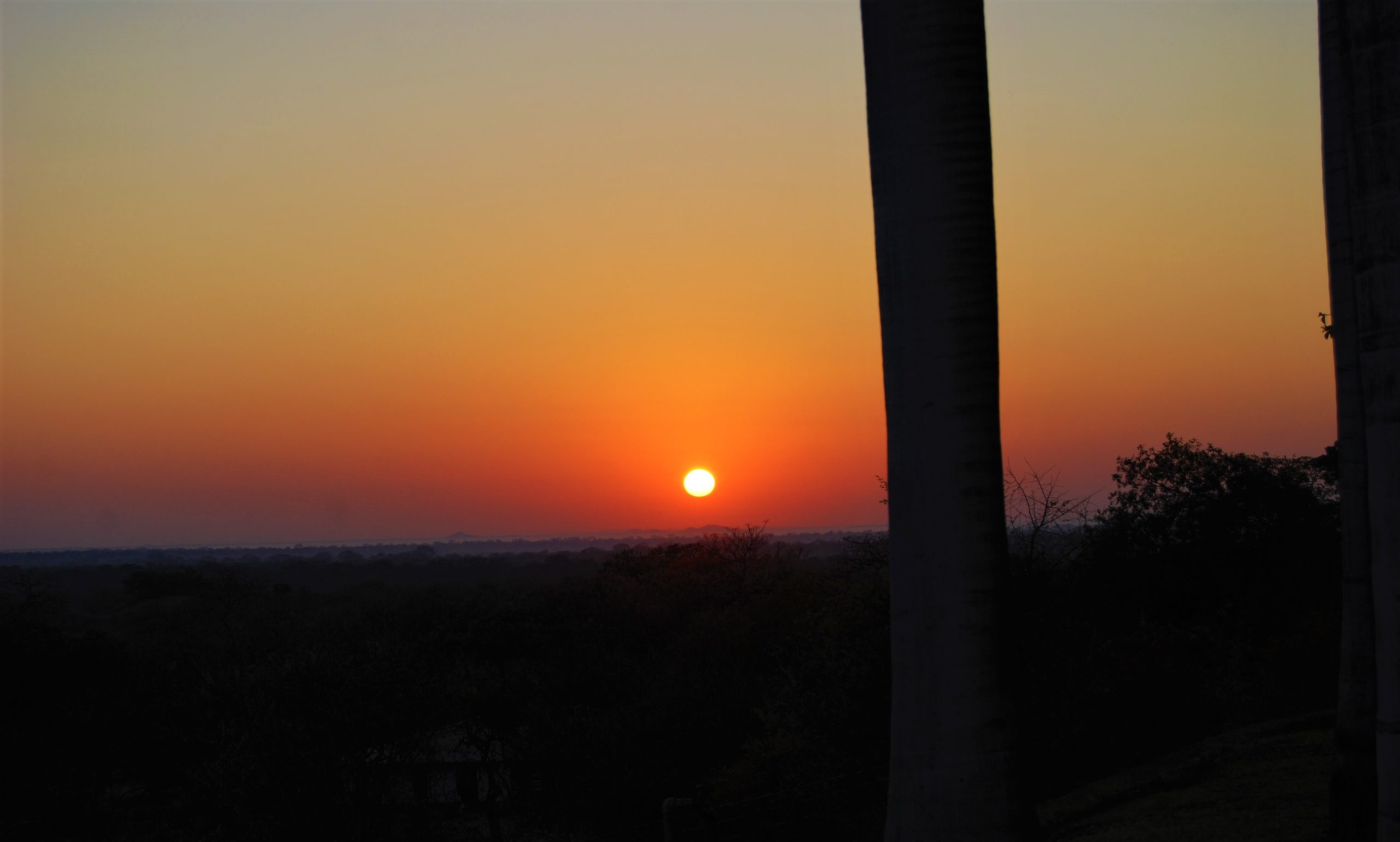
 ????????????????????????????????????[/caption]
126 total views, 1 today

