

CLASSIC SNUBBIES
CLASSIC SNUBBYS
I J Larivers
(This article was originally published in MAN Magnum magazine)

When I first started shooting, we didn’t have much choice in handguns. The only self-loaders that my friends and I would look at were the Colt Government Model in .45 and the Browning Hi-Power in 9mm. The .44 Magnum was a “must have” of course, given the Dirty Harry fever at that time, and I managed to get one, a S&W Model 29. My other revolvers were the S&W Model 28 Highway Patrolman in .357 Magnum and the S&W Model 14 Target Masterpiece in .38 Special. So these were all different, but still pretty much the same. Those were the days before S&W started making the 6-series stainless steel revolvers.
It was also just around the time when Ruger was becoming established in building double actions, and I had .41 and .44 Magnum single-actions.
I mostly stuck with my Colt .45, but circumstances change. I was doing some UIT Centre Fire in those days, and I managed to acquire a Colt Officer’s Model target revolver in .38 Special. It constituted my introduction to Colt revolvers, and I liked what I saw. It was perhaps the finest revolver I have ever owned – a true masterpiece.
At the time, I was doing a fair amount of undercover work with National Parks Investigations Branch, and if this involved a trip to the bush, hiding a folding-stock AK-47 somewhere in the vehicle was always a good plan; as for a sidearm, the .45 was considered the absolute minimum. The opposition kind of expected ivory and rhino horn traffickers to be armed anyway, so concealment wasn’t that much of a big deal. In an urban environment, especially during the African summer, the .45 could be a little OTT.

My first experience with a snub-nosed revolver was the Colt Cobra, and I knew I would have to spend a lot of time on the range with it. Obviously it wasn’t going to like a lot of hot ammo. Practice loads were no problem, because there was a lot of UIT shooting on our range in those days, and the club I belonged to made up very nice target loads with 148gr wadcutter bullets and 3gr of South African Somchem MS200 powder. They were very pleasant to shoot, and actually managed to traverse the 25 metres to the target and go through the paper. They were ideal in the little Colt, which printed roughly 3" above point of aim.
I acquired a couple of HKS speed- loaders and some Second Model Pachmayr grips – I had to ask my gun- smith to modify the frame a little to fit these. To my mind, the club ammo wouldn’t do for carry – not that I’d have invited anyone to shoot me with it. I was discussing this with a diplomat one day, and a solution presented itself. He told me about Hydra-Shok ammunition. This was before the advent of the Internet, and I had never heard of the make. Apparently, this fellow’s embassy security people carried them, but none were available in the local shops. Oddly enough, the next weekend, while we were relaxing over a beer at the end of the day’s shooting, he casually informed me that if I looked behind a rock on the 300m range I might find something of interest.
I found this early Hydra-Shok ammo to recoil very much like the club’s target loads – not at all like the modern Federal Hydra-Shok. We chronographed a couple of rounds out of our snubbies and it clocked just over 600fps. Not encouraging, but in the interests of science we fired a couple of rounds into a stillborn calf carcass and found that the bullets penetrated a good nine inches into the flesh and expanded perfectly. Bullet technology had indeed gone beyond the old well-worn axiom “a hollowpoint has to do at least 1000fps to expand” – and this was over twenty-five years ago. I carried that little snub-nosed Colt for years and loved it.

Today there are a lot more choices on the market and I recently looked at a Taurus Model 85 which my gunsmith had nicely tuned, but a little voice in the back of my mind told me to hold out just a little longer as there seems to be a resurgence of interest in ‘backup’ guns these days, and more carry guns are being used at club shoots. Maybe some- thing more interesting will turn up?
My good friend, former CID Detective Superintendent Charlie Haley, pio- neered the concept of ‘hideout’ guns for our local shooting clubs. He had two he favoured: a nice little nickel-plated Smith & Wesson M38 Airweight .38 special, and a Walther PPK. The little .32 is to European police detectives what the .38 snubby was to their American counterparts. Charlie loved his, and as a result I became the proud owner of the Airweight.
Charlie had had quite a journey with this little gun. Initially it was offered by a local dealer who seemed oblivious to that fact that it was missing its crane; at least this minor omission wasn’t taken into consideration in pricing. After a diligent search, and against all odds, Charlie found a crane – which is blued steel, while the revolver is nickel-plated aluminium. But that was filed under, “Who cares, it’s a carry gun”.
The M38’s hammer is shrouded but still accessible. The double-action trigger is smooth without stacking, and breaks at around 8lbs. The lock-up is great and the piece sports a set of Uncle Mike’s grips. I battled to get a familiar hold on it, just as I had many years earlier with the Cobra, but I loaded some very workable loads with 4.0gr of MP200 behind a 158gr round-nose cast bullet. At 10 metres I’m shooting a little high of point of aim and five rounds offhand grouped into 5” first time out. The phrase ‘good enough for government work’ applies.
The ammo factories have a tendency to go for lighter bullets at higher velocities for use in .38 snubbies. CCI’s non-plus p 125gr JHPs are perhaps the most comfortable rounds I’ve fired through the little Airweight. Then a friend presented me with an unopened box of the old ‘prototype’ Hydra-Shoks. If you ever have the chance to get some of those…do not hesitate. Being full wadcutters, they aren’t too user-friendly in speedloaders, but practice makes almost perfect.
The little J-frame S&Ws are not what you’d want to shoot all day, but they have a very important niche to fill. I still do a little government work, and being armed is part and parcel of the particular department’s mandate.
Of course, today there are so many more options: perhaps a S&W Model 640 in .357, which I feel I don’t really need, or the 642 in .38 Special; I can have Crimson Trace laser grips. I can even carry it in a Kydex holster with Kydex Speed Strips for fast reloads. However, I don’t need all that. HKS speedloaders are fine, and pre-Federal Hydra-Shok ammo is about all I need in the Airweight. And I really like the Glock 23.

A tip on the so-called ‘pocket carry’: put the gun in a holster. The spring-clip soft suede models designed for small- of-the-back, inside-the-waistband carry are ideal in pockets, especially the inside pockets of contractors’ vests.
The Smith & Wesson Airweight was introduced in the same year I was. It is every bit as famous as the Colt Cobra.
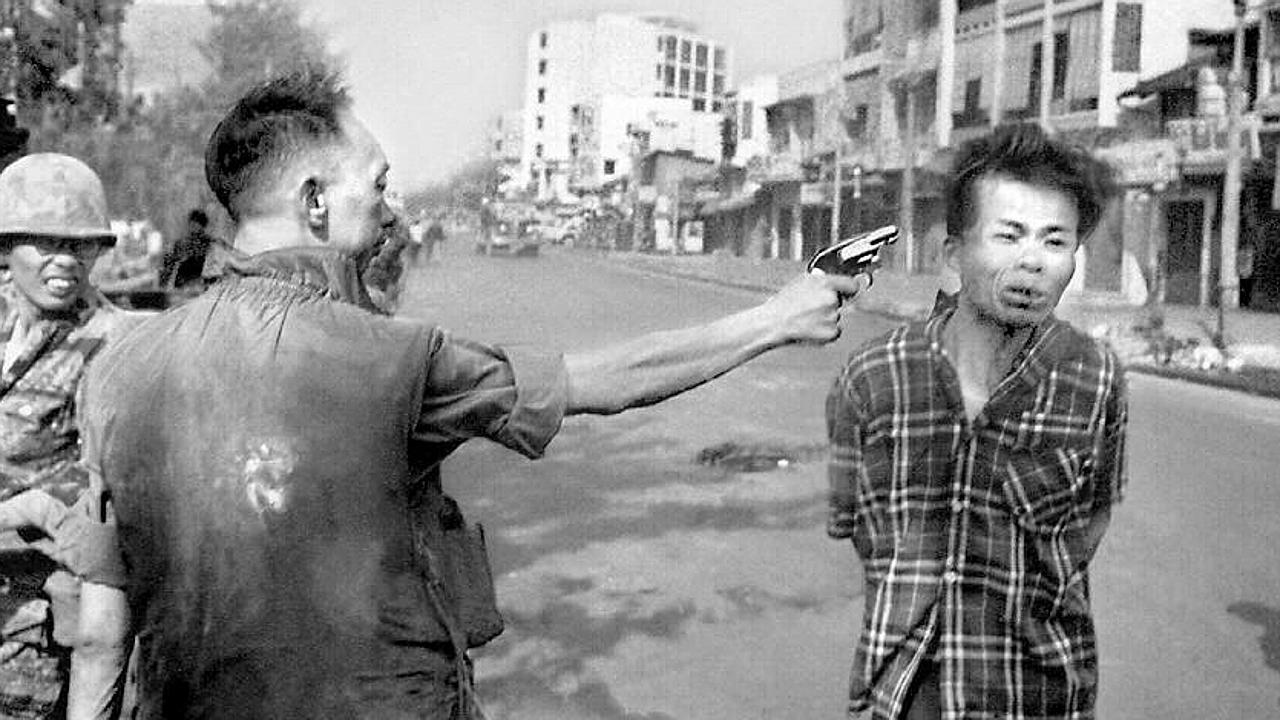
Not to be out-done by Jack Ruby’s elimination of Lee Harvey Oswald with a Colt Cobra, South Vietnamese General Nguyen Ngoc Loan, chief of the national police, shot to fame (no pun intended) on 1 February 1968 when he used a little ‘Smith to publicly execute a Vietcong, Nguyen Van Lem on a Saigon street, in front of Associated Press photographer Eddie Adams. A handgun should have provenance.
PHOTOS
- The Smith & Wesson M38 Airweight and the Taurus M85 - the steel-framed Taurus is ideal for practice.
- National Parks Investigations Branch issue, circa 1980s. This snubby is an Astra - a very nice gun.
- The old and the new: pre-Federal Hydra-Shok in .38 special and 100gr monolithic solids made in South Africa.
- Size and weight-wise, there's not much difference between a .38 snubby and a Glock 23 in .40 S&W...except 8 rounds.
- (l) The Colt Cobra, and (r) the S&W snubby making their mark on history.

165 total views, 1 today

