

AFRICA AND THE ORIGINS OF SCOUTING
AFRICA AND THE ORIGINS OF SCOUTING
I J Larivers
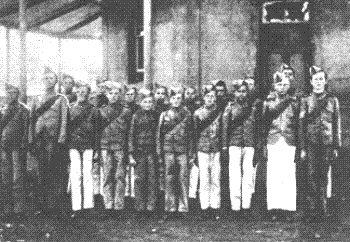
I recently came across a post on Facebook on a page promoting Dick Mawson’s book The Gods Who Fell from the Sky, with the attendant photograph and the caption:
“Something that I didn't know is that Bulawayo is the birthplace of Scouting? One of the main symbols of the Scouting movement is the Kudu Horn. Baden Powell along with the American Scout Burnham were prime movers in the movement formed on a lonely patrol they did together in the Matopos whilst scouting for Bulawayo Field Force in the Matabele rebellion. The picture depicts the first ever boys scout group the 1st Bulawayo (Pioneer) Scouts. Another first for Rhodesia that has real meaning and made things matter.”
So, wondered I, did the Boy Scouts really originate in Bulawayo? Both Baden-Powell and Burnham called the city home at one time.
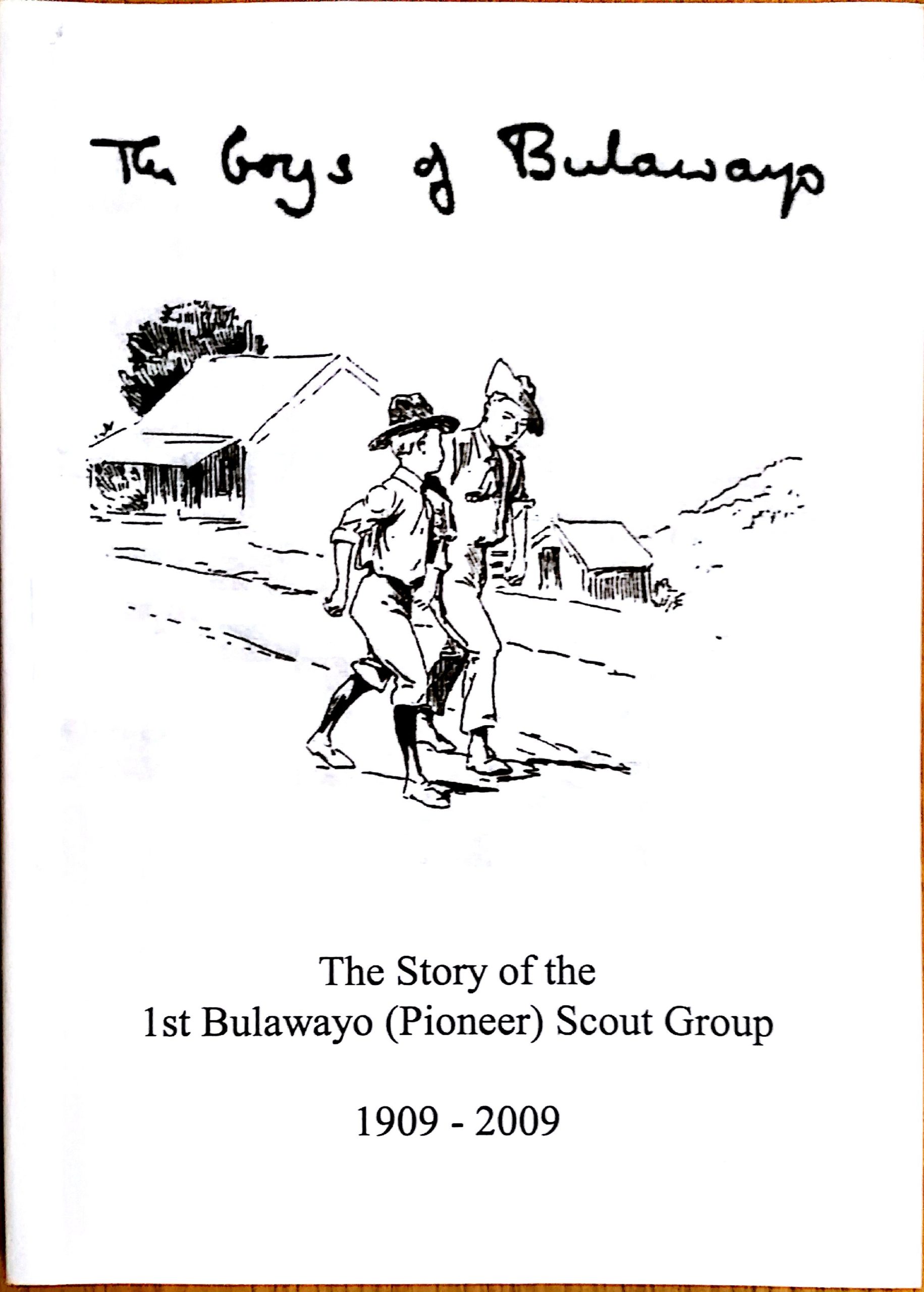
Remarkably, or maybe not, the 1st Bulawayo (Pioneer) Scout Group still exists, and my curiosity led me to the doorstep of an old friend I had not seen for many years, Barry Knight of Bulawayo. I was first introduced to Barry maybe a quarter of a century ago, by our mutual friend, the late Dr Don Ganyana Heath when we were all competing in a shooting match in the City of Kings. Both Don and Barry were scouts, and later scoutmasters. I also got in touch with Norman Scott from Bulawayo, who kindly sent me a copy of Barry’s informative history of the 1st Bulawayo Pioneers, The Boys of Bulawayo. A title taken directly from Lord Baden-Powell himself. Barry starts off the book with a quote from the Bulawayo Chronicle, on a day in 1909:
“A new Boy’s Movement has started in England which is called the Boy Scouts. All its members go around dressed in big hats, short knickers and carrying broomsticks. They can be seen wherever the countryside is heavily wooded, chasing each other with their broomsticks.”
Most of us probably know the backstory.
Lieutenant General Robert Baden-Powell, OM, GCMG, GCVO, KCB and later 1st Baron Baden-Powell (1857 – 1941), had a distinguished career as a lieutenant general in the British Army, but it is probably for being the principal founder of the scouting movement and the first Chief Scout of The Boy Scouts Association that he is most widely remembered today.
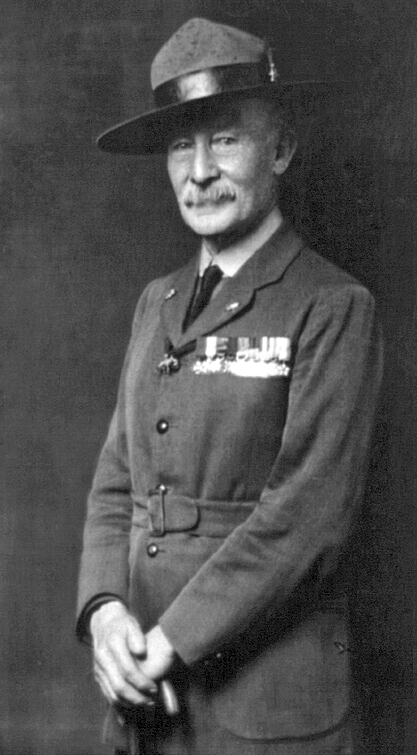
Baden-Powell was educated at Charterhouse School in Surrey, and subsequently served in the British Army in India and Africa for thirty four years. He gained fame for his successful defence of the besieged town of Mafikeng in 1899 during the Second Boer War in South Africa. As a result of his experiences, he wrote a number of books on military topics like reconnaissance and scout training, and it is from these that the scouting movement evolved. His Scouting for Boys, published in 1908, was aimed at just that readership, and even before the book came out, in 1907, scouting was born at the first Brownsea Island Scout camp, which he organised. The Girl Guides, which morphed into the Girl Scouts in America, were formed in 1910 by popular demand among young girls.
Suffering from poor health in later life, Baden-Powell and his much younger wife Olave relocated to Nyeri, Kenya, where he died and was buried in 1941.
There were a number of other organisations for youngsters which had similar tenets. The wildlife artist and writer Ernest Thompson Seton - I found and re-read his Biography of a Grizzly while I was writing this, which brought back a lot of fond memories from my own childhood - founded the Woodcraft Indians, which eventually became the more PC Woodcraft League of America and still survives to this day in chapters like the Woodcraft Rangers in California. Thompson Seton also became actively involved in the scouting movement, and the Scotsman, Major Sir William Alexander Smith had formed the Boys’ Brigade in Britain as early as 1883, and there is no arguing - says an anachronism like myself - that the world would probably be a better place now if more kids spent more effort in learning the basic values associated with these institutions than the vagaries of the latest i-whatever.
But I digress. It is to Bulawayo in Rhodesia that we must go to trace some - but not all - of the origins of the Scouts, which largely grew from a synergy between Baden-Powell and the famed American scout Major Frederic Russell Burnham.
Frederick Russell Burnham, DSO (1861 – 1947) was one of history’s archetypical adventurers: exploits with the British South Africa Company in Rhodesia, prospecting for gold on the Klondike, and serving with the British Army as Chief of Scouts under Lord Roberts in the Second Boer War in South Africa. It was Burnham who introduced his style of woodcraft to Baden-Powell and thus were laid the foundations of the international scouting movement.

Born on a Lakota Sioux Indian reservation in Minnesota, Burnahm learned scouting and outdoor skills from the Native American masters. He had little formal education and never completed high school - not uncommon at all for the time. He saw service as a tracker for the United States Army in the Apache Wars as a civilian, and emigrated with his young family to Africa in 1893.
Burnham served Cecil Rhodes’ British South Africa Company as a tracker, and was most famously associated with the Shangani Patrol commanded by Major Allan Wilson. It was during the Second Matabele War three years later that Burnham made Baden-Powell’s acquaintance, and they became lifelong friends. Burnham’s rank of major, and his investiture with the Distinguished Service Order - which made him the most highly decorated American soldier in the Second Boer War - were British, awarded by King Edward VII. Upon his return to the United States, Burnham embarked on a number of successful business ventures, and together with another friend, Theodore Roosevelt, various conservation initiatives. But he is perhaps best remembered today for his involvement with the American scouting movement, and it is fitting that in California, the mountain beside Mt Baden Powell was name Mt Burnham in 1951.
The legendary South African scout Jan (or sometimes John) Grootboom was at this time also one of Baden-Powell’s mentors in the craft. Grootboom was a Xhosa scout who first made a name for himself in the Matabele Rebellion where his fighting skills earned him the admiration of Frederick Selous; Frank Sykes, author of With Plumer in Matabeleland, commented that Grootboom possessed “an intimate knowledge of the country and the customs and tactics of the natives, combined with courage and absolute self-reliance, he was just the type of man adapted by nature and disposition for the purpose of espionage.” Jan Grootboom is probably best-remembered for his organization of the indaba at Matopos between Cecil John Rhodes and the Ndebele indunas which brought about a negotiated settlement to the rebellion.
It was in 1896, when Baden-Powell was serving in Matabeleland in Rhodesia as Chief of Staff to General Frederick Carrington in the Second Matabele War that he met Burnham. As the two scouted together in the Matopos Hills outside of Bulawayo, Burnham taught Baden-Powell the woodcraft skills he had learned in North America, which fascinated the latter; this sort of training was much less well-known in the British Army than it was in the United States because of the recent American westward expansion. Together with Grootboom, they formulated the concept of a broad training regimen in bushcraft for young men, which would have as its cornerstones exploration, tracking, bushcraft, and self-reliance. Some years later, every morning at Brownsea Island, fledgling scouts would awake each morning to the call of the kudu horn which Baden-Powell had brought back from the Matopos.
The famous Siege of Mafikeng, which is probably the most well-remembered engagement of the Second Boer War, lasted for 217 days and the eventual relief was seen as one of Britain’s most decisive victories. Robert-Baden-Powell, commander of British forces during the siege, emerged as a national hero. During the siege, Baden-Powell made good use of the Mafikeng Cadet Corps, a group of youngsters not unlike the Boy Scouts, whose primary occupation was the relaying of messages. After Mafikeng had been relieved, each member of the Cadet Corps was awarded a badge depicting a combined compass point and a spearhead. It is telling that this symbolism is very much like the fleur-de-lis that is today the symbol of the Boy Scouts.
Baden-Powell had a very unique relationship with Rhodesia, having been appointed Chief of Staff to the Bulawayo Relief Force during the Ndebele uprising of 1896, and having returned in 1899 to raise a force of Rhodesians for the Anglo-Boer War. He returned in 1906, and when he published Sketches in Mafeking and East Africa the following year he spoke with admiration for “the boys of Bulawayo”. And drew the accompanying sketch, which Barry Knight has used as the cover illustration for his history of the 1st Bulawayo (Pioneer) Scout Group.
So, I was able to learn that while Rhodesia was certainly in on the ground floor of the Scouting movement, Baden-Powell’s Brownsea Island outing took place in 1907, Scouting for Boys came out in 1908, and in 1909 Rhodesia’s first Scout troop, the 1st Bulawayo (Pioneer) Scout Group was born, and it certainly did pre-date the introduction of Scouting in most other corners of the world, including America.
I was a Cub Scout and a Boy Scout, and while I don’t remember ever wearing a big hat or chasing anyone with a broomstick, I wish I had appreciated back then the irony of where I would end up spending most of my adult life

PHOTOS
1. Barry Knight's excellent book, The Boys of Bulawayo, with cover art by Baden Powell himself.
2 The ubiquitous Mafikeng Cadet Corps.
3 Lieutenant General Robert Baden-Powell, OM, GCMG, GCVO, KCB.
4 Major Frederick Russell Burnham, DSO.
5 The First Bulawayo (Pioneer) Scouts.
137 total views, 1 today

